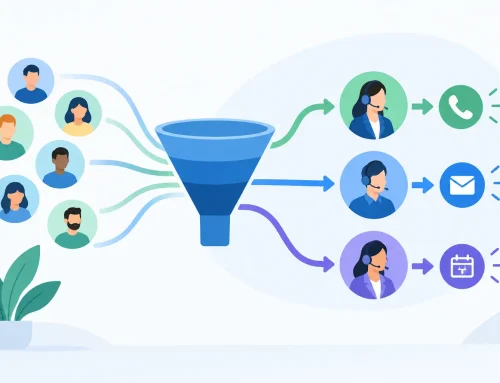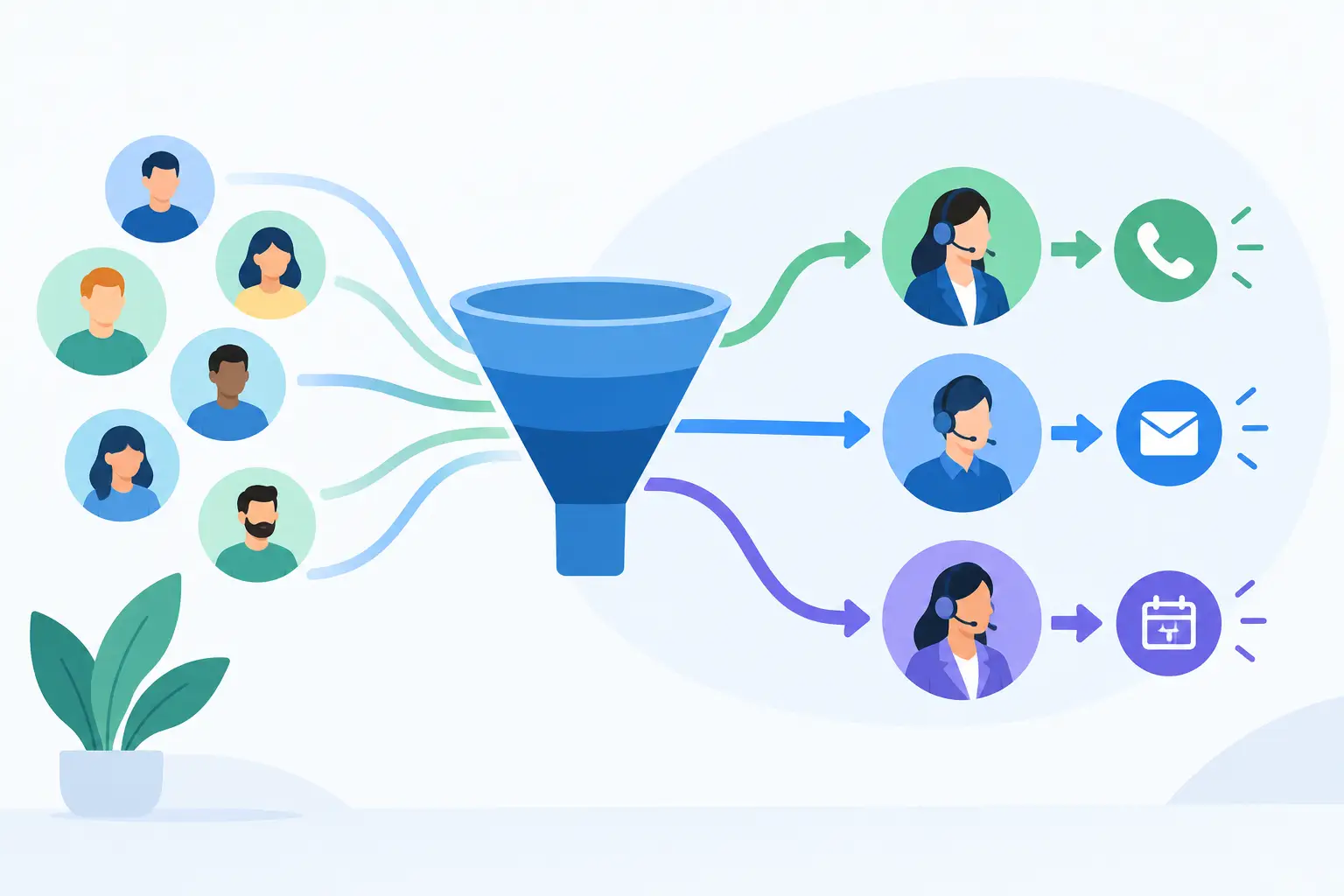
A target account list is not a pipeline strategy. If every company that matches your industry and employee-count filters receives the same outreach, your team will spend most of its time chasing accounts that are unlikely to buy soon. Knowing how to prioritize target accounts changes that equation. It directs SDR capacity, sales attention, and campaign spend toward companies with the strongest combination of fit, timing, and revenue potential.
For sales leaders, the goal is not simply to identify more prospects. It is to create a clear, repeatable decision system for determining which accounts deserve immediate, personalized pursuit and which should stay in nurture until the timing improves.
Start With Account Fit, Not a Massive List
Account prioritization begins with a defined ideal customer profile. This should be more specific than a broad industry label. A healthcare software company, for example, may sell successfully to regional provider groups but struggle with enterprise hospital systems that have long procurement cycles and different compliance requirements. Both are healthcare accounts. They are not equally valuable targets.
Build your fit criteria around the characteristics that consistently show up in closed-won business. Company size, revenue range, geography, technology environment, operating model, growth stage, and buyer titles all matter. So do less obvious factors, such as sales cycle length, implementation complexity, and whether the account can support your average contract value.
A practical fit score should answer one question: if this company had an active need today, would your team want to win it?
High-fit accounts generally have a clear use case, accessible decision-makers, sufficient budget, and a buying process your team can navigate. Low-fit accounts may look attractive on paper but create friction later through limited budget, poor product alignment, or a lengthy sales process that drains resources.
Do not overcomplicate this stage. A scoring model with too many fields becomes difficult to maintain and easy for reps to ignore. Start with three to five criteria that correlate most strongly with revenue outcomes. You can refine the model after enough data is available.
How to Prioritize Target Accounts With Intent Data
Fit tells you whether an account could buy. Intent tells you whether it may be preparing to buy now. The highest-priority accounts sit where those two factors overlap.
Intent signals can include increased research around relevant topics, visits to high-value pages, engagement with webinars, content downloads, competitor comparisons, job postings, technology changes, or activity from multiple contacts at the same company. No single signal guarantees a sales conversation. A person downloading one asset may be researching for a project months away. Multiple signals from the right stakeholders are more meaningful.
This is where many outbound programs lose efficiency. They treat all intent as equal, then overreact to weak activity. Instead, apply context. A high-fit logistics company reviewing pricing-related pages, attending a webinar, and hiring for a role connected to your solution deserves immediate outreach. A low-fit company reading one blog post does not.
Intent should increase an account’s priority, not replace qualification. Strong account selection combines firmographic fit, behavioral evidence, and commercial judgment.
Look for signal clusters, not isolated events
The most useful buying signals often appear in clusters over a short period. Consider the difference between these two accounts:
Account A fits your ICP but has not engaged with your brand or relevant market topics in months. Account B fits the same ICP, has had three contacts interact with your content, recently added a relevant leadership hire, and is showing increased research activity in your category.
Both belong in your target market. Account B belongs at the top of the active outbound queue.
Signal clusters also help your team create better messaging. Instead of sending a generic introduction, reps can lead with a relevant business problem tied to the account’s likely initiative. That increases reply rates without relying on aggressive personalization that adds little value.
Score Revenue Potential and Sales Practicality
The best-fit, highest-intent account is not always the right first call. Revenue leaders also need to assess potential deal value and the practical likelihood of moving the opportunity forward.
A large enterprise logo may represent significant upside, but it can also require a 12-month procurement process, executive sponsorship, security reviews, and a level of support your organization cannot currently provide. A mid-market account with urgent demand, a clear decision-maker, and a 90-day buying cycle may create more pipeline this quarter.
Add commercial factors to your prioritization model, including estimated annual contract value, expansion potential, buying cycle length, customer lifetime value, and probability of access to the buying committee. This prevents teams from building an account list based only on prestige.
A simple tiering approach works well:
- Tier 1 accounts are high fit, high intent, and commercially valuable. They receive focused multichannel outreach, tailored messaging, senior-level involvement when needed, and rapid follow-up.
- Tier 2 accounts have strong fit but weaker or emerging intent. They receive consistent outreach and relevant nurture campaigns until signals increase.
- Tier 3 accounts may be strategically relevant but lack fit, timing, or clear buying potential. Keep them in lower-touch programs rather than consuming prime SDR capacity.
- Disqualify accounts that cannot reasonably become profitable customers, even if they appear engaged. Activity is not the same as opportunity.
The tiers should drive action, not merely organize a spreadsheet. If the outreach motion is identical across every tier, the prioritization model is not doing its job.
Map the Buying Committee Before Outreach Starts
An account can score highly and still fail to convert if your team reaches the wrong people. Prioritization must include contact-level relevance.
For each top-tier account, identify the likely economic buyer, functional owner, technical evaluator, and potential internal champion. In smaller firms, one executive may play several of these roles. In enterprise environments, the buying committee may involve finance, operations, IT, security, and procurement.
The right contact strategy depends on what you sell. A CFO may care about cost control and forecast impact. A VP of Sales may respond to meeting quality, conversion rates, and rep productivity. An operations leader may prioritize process efficiency and implementation risk. Your account score should rise when you can identify and reach the stakeholders who can influence a buying decision.
This is also why broad contact scraping creates poor results. More names do not equal more access. A focused set of relevant contacts, supported by role-specific messaging, produces a stronger path to qualified meetings.
Set Clear Service-Level Rules for Every Tier
Prioritized accounts need operational follow-through. Without clear rules, reps naturally work the easiest prospects, not the highest-value accounts.
Define response expectations for intent spikes and inbound engagement. For example, a Tier 1 account showing strong activity may require outreach within one business day, multiple contact attempts across email, phone, and LinkedIn, and a review by the account executive after meaningful engagement. A Tier 2 account may enter a structured cadence with less personalization and a longer review window.
Your CRM should show the account tier, score drivers, assigned owner, last activity, next action, and current buying signals. This gives sales leadership visibility into whether high-value accounts are receiving the attention the strategy calls for.
Managed outbound teams can be especially effective here because they bring discipline to the process. Appointment Gurus combines account targeting, intent signals, multichannel outreach, and CRM-integrated execution so internal sales teams can focus on active opportunities rather than list building and repetitive prospecting.
Review the Model Against Pipeline Results
No scoring model is permanent. Markets shift, products change, and the accounts that convert best may not match your initial assumptions.
Review prioritization performance monthly or quarterly. Compare tiers against meetings booked, opportunities created, win rates, sales cycle length, and closed revenue. If Tier 2 accounts consistently outperform Tier 1, investigate why. Your fit criteria may be too narrow, your intent weighting may be off, or the sales team may have better access in a different segment.
Pay attention to negative patterns as well. If certain industries generate meetings but rarely produce qualified opportunities, lower their score. If a specific trigger, such as a leadership change or technology adoption, consistently precedes strong conversion, give it more weight.
The point is not to build a perfect model. The point is to make each outbound decision more accountable to revenue data than the last.
Turn Priority Into Productive Sales Conversations
When target account prioritization is working, your SDRs stop treating prospecting as a volume contest. They know which accounts require immediate action, which messages fit the account’s likely priorities, and when to hand engaged buyers to sales.
Start with a manageable list of high-fit accounts, apply intent and commercial scoring, assign clear engagement rules, and measure results against pipeline outcomes. The next qualified meeting is more likely to come from a focused account strategy than from sending another thousand generic messages.