Most pipeline problems do not start with a lack of leads. They start when leads land in five different systems, sit untouched in a rep inbox, or get handed to sales without context. CRM integrated lead generation fixes that by making lead capture, qualification, routing, outreach, and reporting part of one operating system instead of a patchwork.
For B2B sales leaders, that matters because volume alone does not create revenue. Process does. If your SDRs are chasing stale records, your AEs are working unqualified meetings, or your reporting depends on spreadsheets, your top-of-funnel is costing more than it should. The goal is not to generate more names. The goal is to generate qualified opportunities inside the same system your team already uses to sell.
What CRM integrated lead generation actually means
CRM integrated lead generation is the practice of connecting your lead generation engine directly to your CRM so every prospect action, qualification signal, outreach touch, and meeting outcome is visible in one place. That includes inbound form fills, outbound prospecting, paid campaign responses, webinar registrations, AI calling outcomes, email engagement, and booked appointments.
The difference is operational. Instead of exporting lists, importing CSV files, and hoping records match cleanly, the lead generation process feeds the CRM in real time. Sales leadership gets cleaner attribution. SDRs know who to contact and when. AEs see source, intent, messaging history, and qualification notes before the call even starts.
That sounds simple, but execution is where most teams fall short. A tool stack can be connected and still fail if field mapping is poor, lead stages are vague, or ownership rules create delays. Integration is not just a technical setup. It is a sales process decision.
Why disconnected prospecting creates expensive pipeline leaks
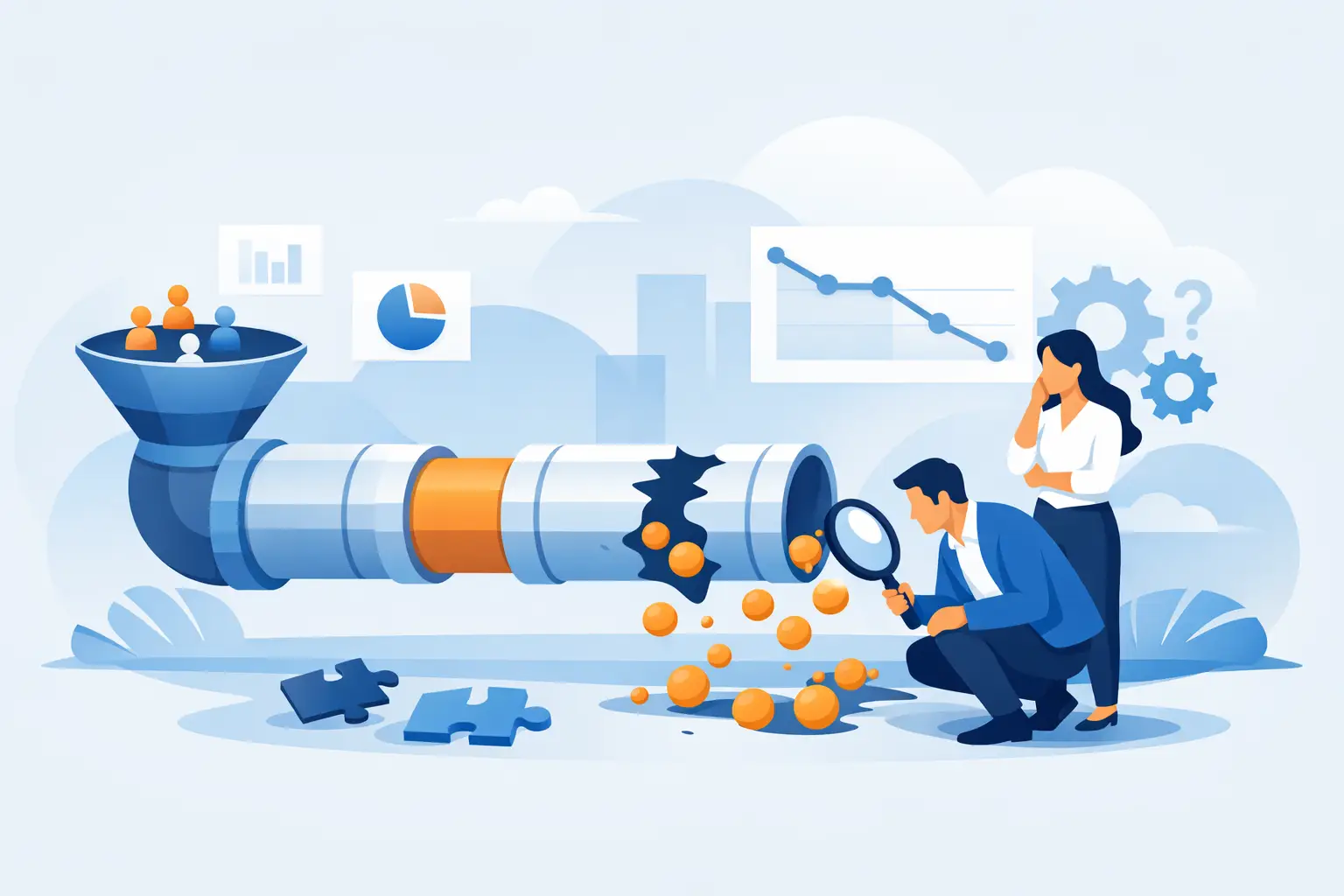
A lot of companies think they have a lead problem when they really have a workflow problem. Marketing says leads are coming in. Sales says they are low quality. RevOps says attribution is messy. Leadership sees inconsistent pipeline and rising acquisition costs.
Usually, the breakdown happens between capture and action. A prospect downloads something, replies to an outbound message, or shows intent on a target account. If that signal does not move into the CRM with the right account owner, lifecycle stage, and next-step trigger, the lead cools off fast.
This gets worse in longer sales cycles. In IT, financial services, healthcare, and logistics, buyers rarely convert after one touch. There are multiple stakeholders, compliance questions, budget timing, and competitive reviews. If your CRM does not reflect the full engagement history, your team loses the thread. Messaging becomes generic, follow-up slows down, and conversion rates slip.
The cost is not abstract. It shows up as missed meetings, duplicated outreach, poor handoffs, and sales reps spending prime selling time doing manual admin work.
The business case for CRM integrated lead generation
When lead generation is built into the CRM, speed improves first. The right lead can be routed to the right rep or sequence immediately. That alone can lift contact rates and meeting conversion because timing matters, especially for active buyers.
Data quality improves next. Standardized fields, deduplication rules, source tracking, and account matching make reports more credible. You can finally answer practical questions without debate: Which channels create booked meetings? Which industries convert? Which messaging creates pipeline, not just replies?
Then there is the management benefit. Sales leaders do not need another dashboard that sits outside the workflow. They need visibility into activity, lead status, follow-up compliance, and opportunity progression in the CRM their team already lives in. That is how you identify where deals stall and where outreach actually produces revenue.
There is also a margin argument. Better integration reduces wasted labor. Your highest-cost sellers should not spend hours researching contacts, updating records, or chasing low-fit leads. A CRM-connected lead generation model shifts that burden into a managed process with clearer qualification and stronger control.
What strong CRM integrated lead generation looks like
A good setup starts with ICP clarity. If you do not know which accounts, titles, industries, and buying signals matter, integration just helps you move bad leads faster. The CRM should reflect your target market with clean segmentation, not a generic contact dump.
Next comes source and intent visibility. Your team should be able to see whether a lead came from outbound, paid media, webinars, referrals, content response, or AI calling. They should also see engagement context such as page visits, campaign interactions, reply sentiment, or intent activity where available. Without that context, follow-up becomes guesswork.
Lead routing needs to be decisive. A qualified healthcare lead in a specific territory should not wait for someone to manually assign it. The CRM should trigger ownership and next actions based on clear rules. If your response process depends on heroics, it will break under scale.
Qualification standards also need structure. MQL, SQL, SAL, booked meeting, and opportunity stages should mean something specific. Loose definitions are one of the biggest reasons teams argue about lead quality. A CRM integrated system works best when qualification criteria are agreed in advance and enforced consistently.
Finally, reporting has to track pipeline, not vanity metrics. Open rates and clicks can be useful directional signals, but they do not tell leadership whether the engine is producing qualified appointments and revenue opportunities. The CRM should show movement from lead to meeting to pipeline to closed business.
CRM integrated lead generation in outsourced execution
For many growth-stage and mid-market firms, building this internally sounds good until the management load shows up. Tools need configuring. Data needs cleaning. Outreach needs running. Sequences need testing. Reps need coaching. Reporting needs maintenance. That is before you even ask whether the team is targeting real in-market buyers.
This is why outsourced models can outperform internal builds when they are done right. A managed partner can combine targeting, intent data, multichannel outreach, AI support, and appointment setting while pushing every meaningful action back into the CRM. That gives leadership visibility without forcing internal teams to build the whole machine.
The catch is that not every vendor handles integration with discipline. Some deliver meetings without consistent data hygiene. Others log shallow activity that looks busy but tells your AEs very little. If you outsource, the standard should be simple: meetings, notes, dispositions, and lead status must be cleanly captured in your CRM and mapped to your sales process.
That is where a performance-focused partner stands apart. Appointment Gurus, for example, operates around managed execution tied to CRM visibility, which is exactly what revenue teams need when they want qualified meetings without extra operational drag.
Common mistakes that weaken results
The first mistake is treating the CRM like storage instead of an active system. If your CRM only records what happened after the fact, it is not helping generate pipeline. It should trigger action, not just document it.
The second is over-automating weak strategy. Automation can speed up routing and follow-up, but it cannot fix poor targeting or generic messaging. If your ideal customer profile is too broad, your outreach will still underperform even with perfect sync.
The third is ignoring sales adoption. A technically correct setup still fails if reps do not trust the data or if required fields slow them down. The process has to support how sales actually works. That may mean fewer fields, tighter stage definitions, and simpler handoff rules.
The fourth is measuring channel output without measuring downstream quality. A campaign can generate a lot of leads and still damage performance if few convert to real opportunities. CRM integration matters because it lets you follow the full path, not just the top-of-funnel spike.
How to evaluate your current setup
Ask a few direct questions. Can your team see every lead source and outreach touch inside the CRM? Are qualification notes consistent enough that an AE can step into a meeting fully prepared? Are lead response times tracked and enforced? Can leadership tie meetings back to source, industry, account list, and conversion outcome?
If the answer is no to more than one of those, your lead generation engine is probably creating friction somewhere between prospecting and pipeline. That does not always mean replacing your stack. Sometimes it means tightening routing, cleaning field logic, or redefining stages. Other times it means moving to a managed model because your team should be closing, not building prospecting operations.
The real advantage is control
The strongest argument for CRM integrated lead generation is not convenience. It is control. Control over lead quality, response speed, attribution, rep activity, handoff quality, and pipeline forecasting. Without that control, growth becomes noisy. With it, top-of-funnel becomes more predictable and much easier to scale.
If you want more qualified meetings, cleaner data, and a sales process that does not lose momentum between first touch and first call, start by looking at where your leads live, how they move, and who acts on them. Revenue teams do not need more disconnected activity. They need a lead generation system that shows up where selling actually happens.