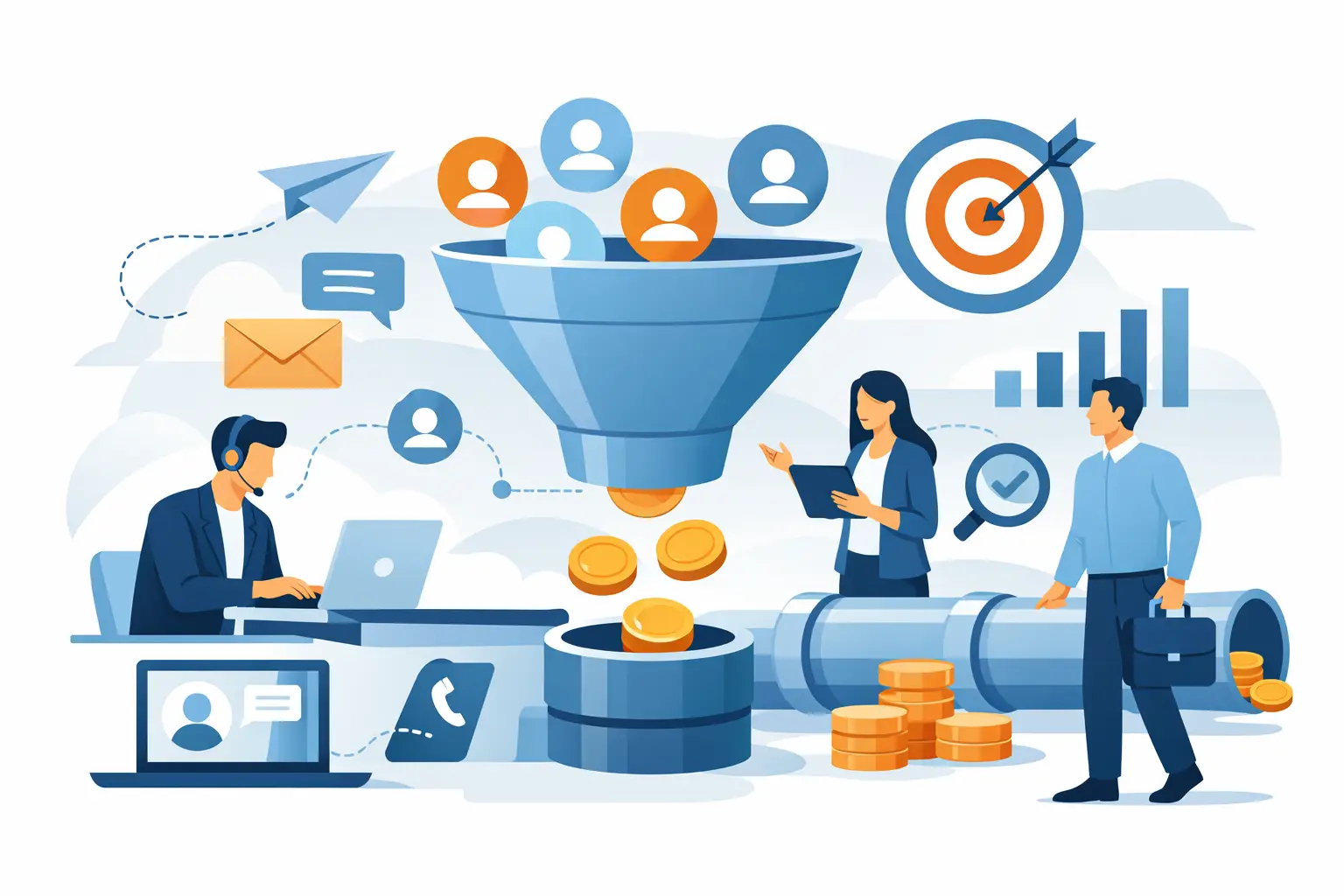
A sales team can run hundreds of outbound touches and still create no pipeline if it is targeting the wrong accounts, using weak timing signals, or treating every prospect the same. The best outbound prospecting tactics are not about sending more messages. They are about finding in-market buyers, starting relevant conversations, and converting those conversations into qualified sales meetings.
For B2B sales leaders, the goal is not activity for activity’s sake. It is a repeatable top-of-funnel system that gives closers the right opportunities without forcing them to spend their best selling hours building lists, chasing replies, and updating records.
Start With a Revenue-Ready Ideal Customer Profile
Outbound performance starts before the first email or call. A broad description such as “mid-market technology companies” is not an ideal customer profile. It is a market category. A revenue-ready ICP identifies the companies most likely to buy, stay, expand, and produce a worthwhile return on acquisition cost.
Define firmographic fit first: industry, company size, geography, growth stage, technology environment, and revenue model. Then add operational conditions that create urgency. For example, a logistics provider may be a stronger prospect when it is opening new locations, hiring operations leaders, or modernizing its technology stack. A financial services firm may become more receptive after a compliance change, leadership transition, or new product launch.
The same discipline applies to contacts. Identify the economic buyer, operational owner, internal champion, and potential blocker. A VP of Sales, CFO, COO, and Head of Revenue Operations may all care about pipeline performance, but they do not respond to the same message. Role-specific positioning improves reply quality and prevents the generic outreach that gets ignored.
Use Intent Data to Prioritize Buyers Who Are Active
Most outbound programs fail because they treat cold accounts and active buying accounts as equal. They are not equal. A company researching a relevant solution category, visiting comparison pages, expanding its team, or engaging with related content deserves faster and more focused outreach than an account with no visible buying signal.
Intent data gives prospecting teams a way to rank accounts by likelihood to engage. It should not replace qualification. Intent can be noisy, and research activity does not guarantee budget or authority. But it is a powerful prioritization layer when combined with ICP fit, trigger events, and contact verification.
Build account tiers based on both fit and timing. High-fit accounts with active intent should receive personalized, coordinated outreach immediately. High-fit accounts without current signals can enter a lower-frequency nurture sequence. Low-fit accounts should not consume SDR capacity simply because they appear on a large list.
This approach increases efficiency in two ways. First, reps spend more time where a conversation is plausible. Second, marketing and outbound teams can see which signals actually correlate with booked meetings and pipeline, then refine the model over time.
The Best Outbound Prospecting Tactics Create Relevance Fast
Prospects do not need another vague message about “helping companies grow.” They need a credible reason to believe your outreach applies to a business issue they recognize. The first touch should make that connection in seconds.
Lead With a Specific Business Problem
Strong outbound messaging starts with a problem the buyer already feels. For a sales leader, that could be inconsistent pipeline coverage, low meeting quality, SDR turnover, or account executives spending too much time prospecting. For a healthcare executive, it may be referral volume, patient acquisition, or fragmented outreach workflows.
Keep the language commercial and concrete. Instead of claiming that your company “drives transformation,” show the operational result: more qualified meetings, reduced lead response time, cleaner routing, lower acquisition cost, or better conversion from target account to opportunity.
A useful message has three parts: a relevant observation about the prospect’s market or company, a clear outcome tied to their role, and a low-friction next step. The point is not to explain every capability in the first email. It is to earn the next conversation.
Personalize at the Account Level, Not Just the First Name
First-name personalization is table stakes. Meaningful personalization connects the message to the account’s business model, market conditions, hiring activity, technology investments, or stated priorities.
This does not mean every SDR must spend 20 minutes researching every contact. That approach does not scale. Instead, create industry-based talk tracks, account segments, and trigger-based message variants. Reserve deeper one-to-one research for priority accounts where deal value justifies the effort.
The trade-off is clear. More personalization can improve response rates, but over-customization lowers outreach volume and can make the program expensive. The right balance depends on average contract value, sales cycle length, and total addressable market. Enterprise accounts usually warrant deeper research. High-volume mid-market programs need efficient, relevant segmentation.
Coordinate Email, Phone, and Professional Social Channels
Email alone is easy to ignore. Calls alone are difficult to scale without accurate data and strong coaching. Professional social outreach alone can become slow and informal. A multichannel sequence works because it creates familiar, consistent contact across the places B2B buyers already use.
A practical sequence may begin with an email tied to a business trigger, followed by a call that references the same issue. A short social interaction can reinforce credibility before a later follow-up. Each touch should add context rather than repeat the same copy.
Do not confuse multichannel with excessive frequency. Five irrelevant messages across three channels will still damage your brand. Use sensible spacing, clear opt-out handling, and a defined stop rule when a prospect is unresponsive or clearly not a fit. Persistent is useful. Annoying is not.
Make Calls Part of the System, Not a Last Resort
Phone outreach remains one of the fastest ways to qualify interest, test messaging, and reach senior decision-makers. The issue is not whether calling works. The issue is whether the calling motion is supported by quality data, a relevant reason for the call, and a process for handling outcomes.
Every call disposition should inform the next action. A prospect who says “call next quarter” needs a scheduled follow-up and a CRM note, not a generic sequence restart. A wrong contact can reveal the actual stakeholder. A no-answer pattern may indicate that email or social should carry the next touch.
AI calling can add scale for initial outreach, reminders, and basic qualification, particularly where speed matters. It should be used carefully. Complex discovery, sensitive objections, and high-value conversations still require skilled human sellers who can listen, diagnose, and build trust.
Build Follow-Up Around Speed and Sales Context
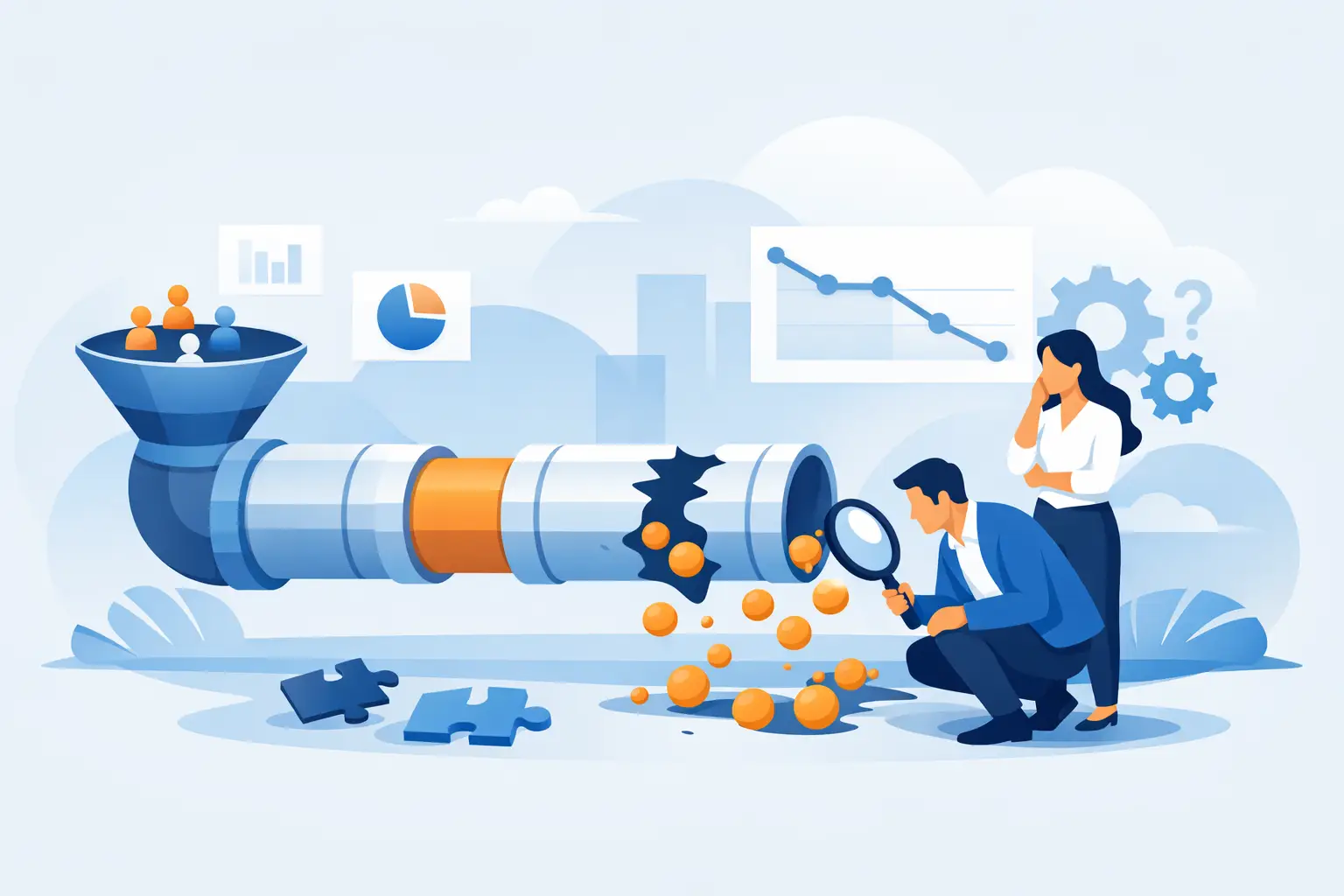
Outbound prospecting does not end when a prospect responds. Many pipeline leaks happen after interest appears. A reply sits unassigned, a meeting is booked without qualification, or an account executive receives no context before the call.
Set clear service-level agreements for response time, especially for high-intent replies. The team should know who owns the next action, what qualifies as a sales-ready meeting, and what information must be captured before handoff. At minimum, record the contact’s role, stated challenge, relevant trigger, current process, timing, and any objection raised.
CRM integration matters here because it turns outreach into an operating system rather than a collection of isolated activities. When account history, call outcomes, emails, meeting notes, and opportunity stages live in one workflow, leaders can identify where conversion is breaking down.
A qualified appointment is not simply a calendar event. It is a meeting with the right account, the right stakeholder or buying group, a plausible business need, and enough context for a productive sales conversation.
Measure Pipeline Quality, Not Vanity Metrics
Open rates, connection requests, dials, and email volume can help diagnose activity. They should not define success. An outbound program can generate strong engagement and still fail to produce revenue if the audience is wrong or meetings are poorly qualified.
Track the full path from target account to closed revenue. The most useful measures include positive reply rate, conversation rate, meeting show rate, meeting-to-opportunity conversion, opportunity-to-close conversion, pipeline created, and cost per qualified meeting. Review results by industry, account tier, persona, campaign, and source signal.
This reporting exposes the real problem. If meetings are booked but do not convert, qualification or messaging may be weak. If outreach gets no replies, targeting, deliverability, offer relevance, or timing may be the issue. If opportunities convert but volume is low, the program may need more capacity rather than a new strategy.
Choose Execution Capacity That Matches the Growth Target
Building an internal outbound engine requires recruiting, training, data management, sequencing tools, call coaching, deliverability controls, campaign operations, and reporting discipline. That can be the right investment for companies with the volume, management capacity, and long-term scale to support it.
For many growth teams, however, the bottleneck is not strategy. It is execution. They need qualified meetings now, but their account executives are closing deals and their internal team cannot absorb another operational function. A managed outbound partner such as Appointment Gurus can provide the targeting, intent data, multichannel execution, AI-enabled capacity, and CRM-connected reporting needed to create pipeline without adding internal management overhead.
The right next step is to audit your current motion against one question: are your sellers spending their time in qualified conversations with accounts that have a reason to buy? If the answer is no, fix the targeting and follow-up process before asking the team to send another thousand messages.