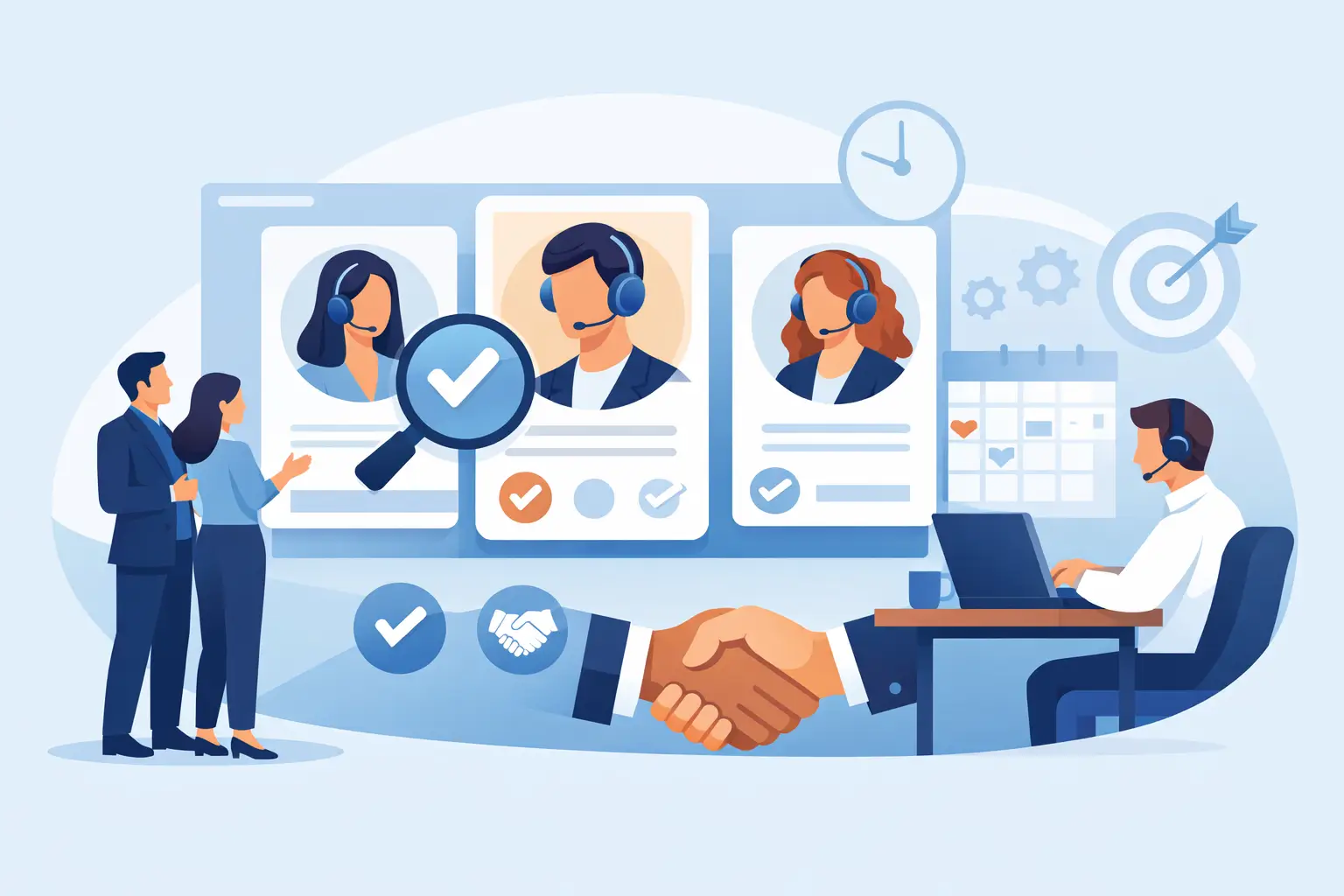
A voice agent that sounds polished but fails to create qualified sales conversations is not a pipeline solution. It is an expensive experiment. This voice ai software review is built for B2B sales leaders who need to know whether an AI calling platform can produce booked meetings, protect their brand, and reduce the prospecting burden on internal teams.
The right platform can increase calling capacity, respond faster to inbound demand, and handle basic qualification at scale. The wrong one can frustrate prospects, create compliance exposure, and fill calendars with meetings that sales teams do not want. The difference is not the demo. It is how the software performs inside a disciplined outbound process.
What Voice AI Should Do for a B2B Pipeline
Voice AI is most valuable when it supports a clear revenue workflow. That starts with a defined ideal customer profile, accurate contact data, relevant messaging, and a qualification standard that sales accepts. Calling software cannot repair weak targeting or an offer that does not earn attention.
For growth teams, the best use cases are practical. A voice agent can follow up with form fills before intent fades, re-engage prospects after email outreach, confirm event attendance, qualify lower-priority accounts, and schedule a conversation when a buyer meets agreed criteria. It can also keep a large prospect list moving while human SDRs focus on complex conversations and high-value accounts.
The objective is not to replace every human sales call. It is to create more productive conversations and a more predictable path from target account to qualified opportunity. If a vendor frames the product as fully autonomous selling, ask for proof that it can navigate your market, buyer roles, objections, and CRM process.
Voice AI Software Review: The Criteria That Matter
A useful review does not begin with the voice itself. Natural speech matters, but it is only one part of the operating model. Sales leaders should evaluate the platform against the outcomes their revenue team is measured on.
Call quality and conversation control
A strong AI voice agent should sound clear, professional, and appropriate for the audience. It should manage interruptions, recognize common responses, ask relevant follow-up questions, and recover when a prospect gives an unexpected answer. A realistic voice alone is not enough. The agent needs a conversation design that moves toward a specific next step without sounding scripted or evasive.
Test the platform with the actual language your prospects use. In IT, healthcare, financial services, and logistics, buyers often use specialized terms, acronyms, and operational objections. Ask vendors to demonstrate how the agent handles a skeptical prospect, a request for a human, a pricing question, and a disqualification. Those moments reveal more than a polished opening script.
Qualification that sales will trust
Booked meetings are a weak metric if the meetings are not qualified. Your voice AI should capture the information that determines whether an account belongs in the pipeline: company fit, decision-maker role, current process, timing, pain point, and willingness to evaluate a solution.
Define the handoff rules before deployment. For example, a meeting may require a target-industry account, a decision-maker or influencer, an active business challenge, and an agreed reason to speak with sales. The exact criteria depend on your sales motion, but they should be visible in the CRM and shared by marketing, SDR, and closing teams.
If the platform cannot reliably distinguish curiosity from commercial intent, it will create meeting volume without revenue value. That is not efficiency. It is calendar management.
CRM integration and operational visibility
Voice AI software must fit the systems your team already uses. At a minimum, call outcomes, recordings or transcripts, disposition codes, qualification responses, follow-up tasks, and scheduled meetings should appear in the CRM without manual work.
Sales leaders also need reporting that answers operational questions: Which campaigns produce conversations? Which personas convert to meetings? What objections appear most often? How many meetings show, qualify, and advance to opportunity? A dashboard that reports only total dials and appointments is not enough to manage pipeline performance.
Look closely at how records are created and updated. Duplicate contacts, vague notes, and missing dispositions create problems that compound over time. The right technology should improve data hygiene rather than generate more cleanup work for your team.
Compliance, consent, and brand protection
AI calling carries real compliance responsibilities. The rules affecting outreach can vary by geography, contact type, calling method, consent status, and industry. Platforms should offer controls for suppression lists, calling windows, recording disclosures, opt-outs, and approved scripts. Your legal team should review the process before campaigns go live.
Brand protection matters just as much. An AI agent represents your company in a live conversation, often with senior decision-makers. You need control over the agent’s introduction, claims, escalation paths, and boundaries. It should not invent pricing, make unsupported promises, or continue pushing after a prospect declines.
The best vendors treat quality assurance as an ongoing function, not a launch task. That means reviewing calls, identifying failure points, updating scripts, and monitoring whether the AI is creating the right buyer experience.
Where Voice AI Produces the Best Results
Voice AI works best when it is assigned a focused role in a multichannel system. It is highly effective for speed-to-lead, because response time can determine whether an inbound inquiry becomes a real opportunity. It can also support event follow-up, webinar attendee qualification, renewal reminders, missed-call recovery, and nurture campaigns where a phone conversation provides a faster signal than another email.
Outbound campaigns require more care. A cold prospect has not asked to hear from you, so targeting and relevance must be high. Use intent data, account segmentation, and industry-specific messaging to prioritize the people most likely to have an active need. The voice agent should reinforce a coordinated email and LinkedIn sequence, not operate as a disconnected dialing machine.
For high-ticket or consultative sales, a hybrid model is usually the better choice. Let AI manage speed, consistency, and early-stage routing. Let experienced SDRs or account executives handle nuanced discovery, strategic accounts, and conversations where trust is central to the sale.
Questions to Ask Before You Buy
During an evaluation, ask vendors to show production evidence rather than theoretical capability. You want to know how the platform performs with companies that have a similar sales cycle, audience, and qualification requirement.
Ask how quickly scripts can be updated, how the system handles opt-outs and wrong numbers, and what happens when a prospect requests a human. Confirm whether your team owns call data and transcripts. Understand the pricing model as well. Per-minute costs can look attractive until long conversations, retries, transfers, and implementation services are included.
Most importantly, ask for the metrics that matter after a meeting is booked. What percentage of appointments show? How many meet the client’s qualification threshold? How many become sales-accepted opportunities? A vendor that cannot discuss downstream conversion is optimizing for activity, not revenue.
A Better Way to Launch Voice AI
Start with a narrow pilot. Choose one segment, one use case, and one measurable objective, such as qualifying webinar registrants or contacting inbound leads within five minutes. Build a controlled call script, document escalation rules, and set a baseline for conversion performance before turning on the agent.
Review calls frequently during the first few weeks. Listen for awkward transitions, inaccurate responses, poor qualification, and prospect frustration. Then adjust the conversation flow based on real evidence. This is where managed execution can make a major difference: technology needs targeting, campaign management, quality control, and CRM discipline around it to produce qualified meetings.
Appointment Gurus approaches AI calling as one part of a managed pipeline engine, supported by intent-led targeting, multichannel outreach, and clear qualification standards. That structure keeps the technology focused on the commercial outcome that matters: more sales-ready conversations for your team.
The best voice AI investment is not the one that makes the most calls. It is the one that gives your closers more credible reasons to have the next conversation.