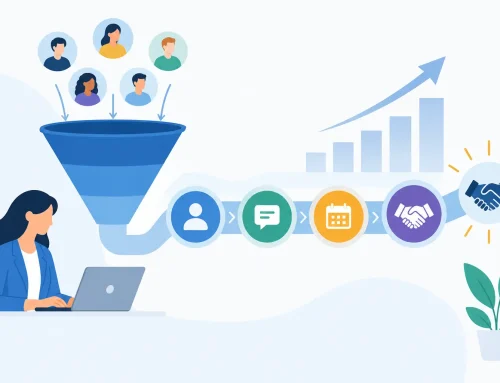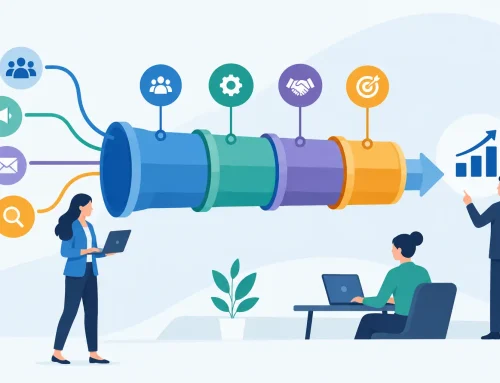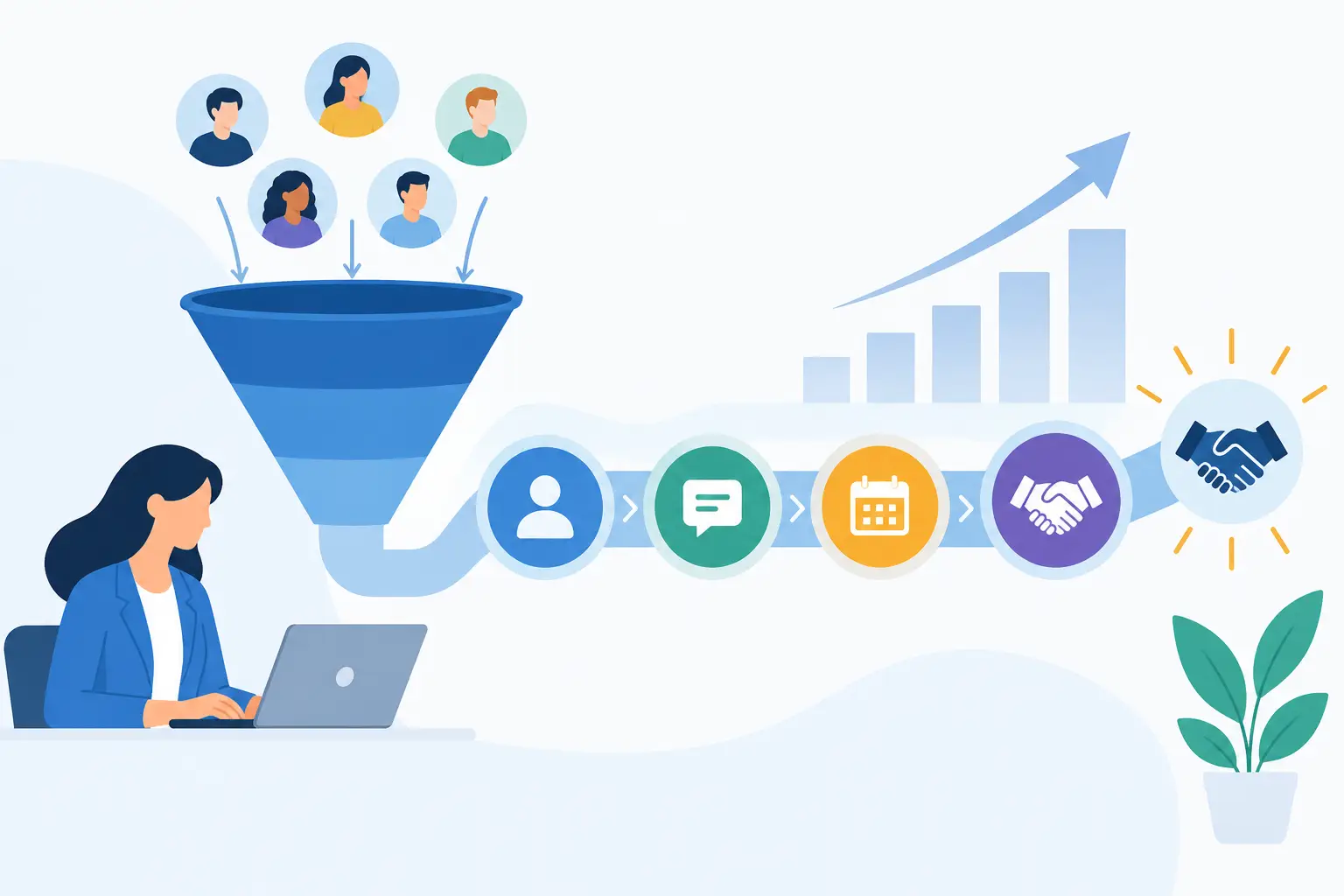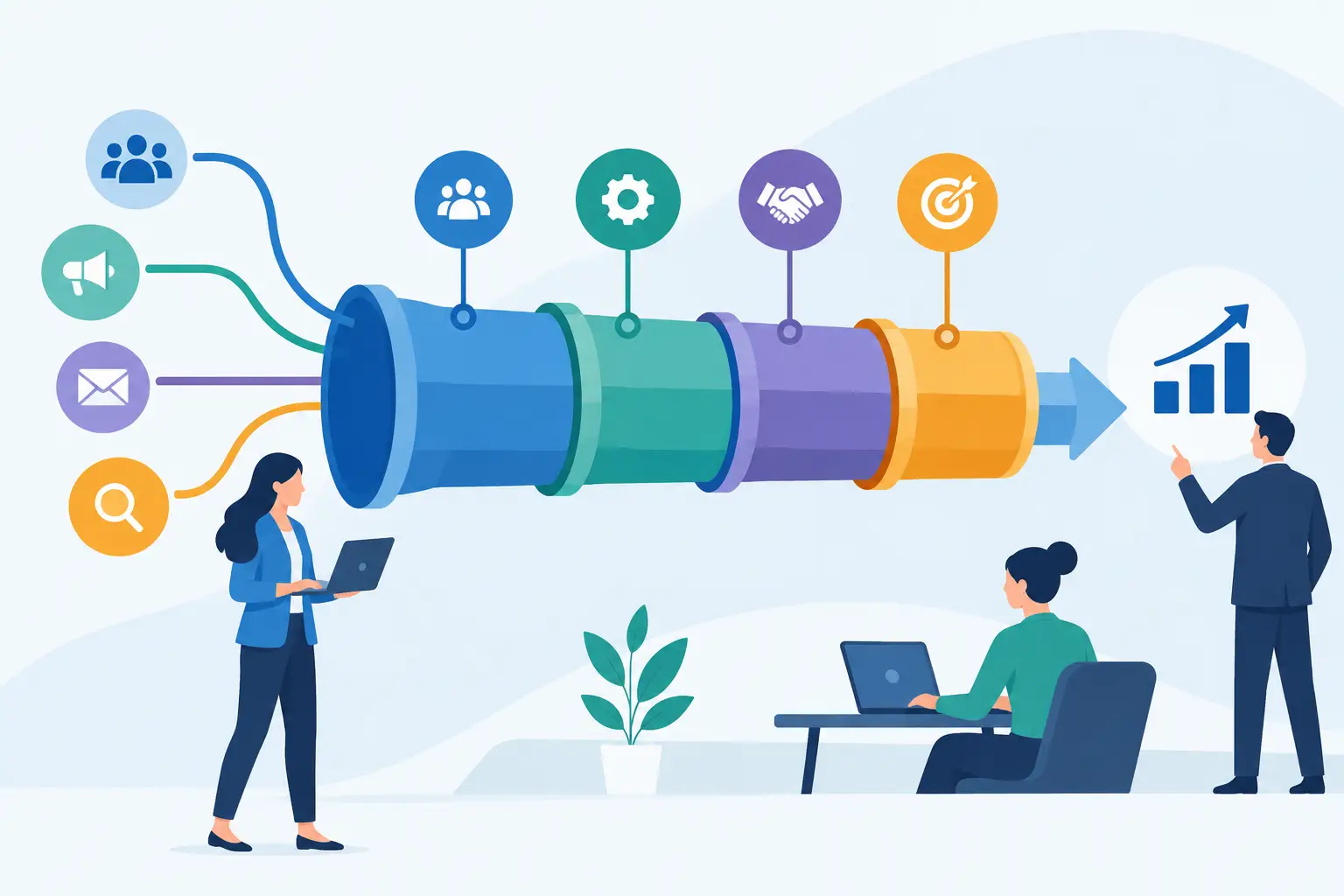
A sales rep spends 90 minutes researching accounts, writing first-touch emails, chasing replies, and coordinating calendars. Then the prospect no-shows. That is the real cost problem behind the question, can AI book sales meetings? The answer is yes, but only when AI is applied to a disciplined appointment-setting process instead of treated like a shortcut for poor targeting.
For B2B companies with uneven pipeline, AI can remove a large share of manual prospecting work and create more conversations with the right buyers. It cannot, by itself, define your ideal customer, fix a weak offer, or turn a curious contact into a qualified opportunity. The strongest results come from pairing AI speed with intent data, human oversight, multichannel outreach, and clear qualification rules.
Can AI Book Sales Meetings for B2B Teams?
AI can book sales meetings by identifying relevant accounts, prioritizing contacts, personalizing outreach, responding to common questions, following up at the right time, and offering calendar availability. AI voice agents can also place calls, handle early-stage conversations, confirm interest, and move qualified prospects toward a scheduled discussion.
That matters because the first part of the sales process is full of repetitive work. Your account executives should not spend prime selling time building lists, updating records, or sending a fifth follow-up to a contact who opened an email three times. AI can absorb much of that activity and give closers more time for discovery, demos, proposals, and deal progression.
But booking a meeting is not the same as creating pipeline. A full calendar is only valuable when those meetings come from accounts that fit your market, have a relevant business need, and include people who can influence a purchase. If AI is fed a broad list and told to maximize appointments, it may do exactly that while creating a quality problem for the sales team.
The operating standard should be qualified meetings, not meeting volume alone.
Where AI Delivers the Most Value
AI performs best when the process is structured and the goal is specific. In outbound sales, it can evaluate large account lists against firmographic criteria, detect signals that suggest buying interest, and direct outreach toward contacts who are more likely to engage. This is a major advantage over the old model of treating every record in a database as equally valuable.
It also improves consistency. Follow-up is where many internal teams lose opportunities. Reps get busy, leads go cold in the CRM, and a prospect who was interested last week disappears because no one sent the next message. AI-led sequences can maintain a deliberate cadence across email, phone, LinkedIn, and other approved channels without relying on a rep’s memory.
Scheduling is another clear use case. Once a prospect reaches a defined level of interest, an AI assistant can present available times, handle basic back-and-forth, send confirmation details, and trigger reminders. Reducing that friction can increase the percentage of interested prospects who actually reach the calendar.
AI calling is especially useful for companies that need speed-to-lead or broader coverage. A well-configured voice agent can contact leads quickly, ask a focused set of qualification questions, route strong opportunities to the correct seller, and keep the pipeline moving outside normal calling windows. The script, escalation rules, and compliance controls matter. A voice agent should sound clear and helpful, not attempt to impersonate a human or force a conversation that is going nowhere.
The Inputs That Determine Meeting Quality
AI does not make targeting decisions in a vacuum. It works from the data, messaging, and rules it receives. Poor inputs produce polished versions of poor outreach.
Start with a narrow ideal customer profile. Define the industries, company sizes, geographies, technology environment, revenue ranges, and operating conditions that make an account worth pursuing. A healthcare technology provider, for example, may need a very different account model and buyer message than a logistics software company. Generic targeting creates generic conversations.
Next, establish qualification criteria before outreach begins. Sales and marketing should agree on what must be true before a meeting is counted as qualified. That may include role seniority, company fit, an active initiative, a stated pain point, a timeline, or willingness to evaluate a solution. Not every campaign needs every requirement, but the rules must be visible.
Finally, give the AI a message worth delivering. Personalization is not inserting a first name and company name into a template. It is connecting a credible business problem to the prospect’s role and market context. For a CFO, that could mean lower acquisition costs or more predictable revenue forecasting. For a VP of Sales, it may be stronger pipeline coverage and fewer hours lost to prospecting.
AI Should Qualify Interest, Not Manufacture It
There is a practical limit to automation. AI can recognize reply intent, answer straightforward questions, and ask whether a prospect is open to a conversation. It should not pressure prospects, invent details about your company, or claim that every response represents purchase intent.
The best workflows include a handoff point. When a prospect raises a nuanced objection, asks about a technical requirement, has an unusual buying structure, or signals serious interest, a trained person should step in. Human judgment is still essential for reading account politics, validating urgency, and turning a positive response into a productive sales conversation.
This is also why managed execution often outperforms a tool-only approach. Software gives a company capacity. It does not automatically create the strategy, account selection, copy testing, call monitoring, CRM hygiene, and daily optimization needed to protect quality. An outsourced sales development partner can combine the technology with accountable operators who watch what is actually converting.
At Appointment Gurus, that model centers on in-market targeting, multichannel outreach, AI-enabled conversations, and CRM-integrated reporting so sales teams can see where meetings came from and what happens after the handoff.
A Better Process for AI Appointment Setting
A productive AI appointment-setting program starts with alignment, not automation. Sales leadership should decide which segment needs pipeline, what the offer is, who owns follow-up, and how meeting quality will be measured. Then the campaign can be built around real revenue goals rather than vanity metrics.
The process should move in a clear sequence:
- Define the target account universe. Build lists around the companies most likely to benefit from your solution, then prioritize accounts showing relevant intent or change signals.
- Map buyers and pain points. Identify the economic buyer, day-to-day champion, technical evaluator, and likely blockers. Different roles need different reasons to respond.
- Launch coordinated outreach. Use AI to support relevant email, calling, social touches, and follow-up rather than relying on one channel to carry the campaign.
- Qualify and route conversations. Capture the details that matter, schedule appropriate prospects, and direct them to the right seller with clear notes in the CRM.
- Review outcomes every week. Look beyond reply rates. Measure held meetings, sales acceptance, opportunity creation, pipeline value, and conversion by segment.
That final step separates an efficient program from a busy one. If one vertical generates many meetings but few opportunities, the issue may be targeting, qualification, or the offer itself. If a campaign reaches the right accounts but receives limited engagement, messaging or channel mix may need adjustment. AI makes testing faster, but leadership still has to interpret the data and make commercial decisions.
The Metrics That Matter After the Calendar Invite
A booked meeting is a leading indicator, not the finish line. Sales leaders should track meeting-to-held rate, sales-accepted meeting rate, opportunity conversion, pipeline generated, and cost per qualified opportunity. These measures reveal whether automation is creating real demand or simply generating activity.
Also watch the time from first response to scheduled meeting. Fast follow-up can materially improve conversion, especially when prospects are evaluating multiple providers or responding to a recent business trigger. AI helps protect that window, but the sales team must be ready to take the meeting while interest is fresh.
The right benchmark varies by market. Enterprise campaigns tend to have longer sales cycles and lower raw meeting volume, while mid-market offers may move faster. The goal is not to force one universal number. It is to build a repeatable engine that produces opportunities your team would choose to pursue.
When AI Is the Wrong Fix
AI will not repair a product-market fit issue, an undefined buyer, or a sales team that does not follow up. It is also a poor fit for campaigns that require highly sensitive, deeply consultative first conversations with very small account lists. In those cases, research support and workflow automation may help, but the first outreach should remain heavily human-led.
Compliance is another non-negotiable consideration. Companies using AI calling and automated outreach need clear consent practices, accurate disclosures where required, opt-out management, data governance, and campaign controls. Faster outreach is not worth legal exposure or damage to your brand reputation.
The practical question is not whether AI can replace sales development. It is whether AI can make your sales development operation more precise, responsive, and measurable. When it is connected to the right accounts, the right message, and a team that owns outcomes, it can turn prospecting from a constant drain on closers into a dependable source of qualified conversations.
Build the process around buyer quality first, then use AI to create the speed and consistency your pipeline has been missing.