A calendar packed with demos is not a pipeline strategy if most prospects lack budget, authority, urgency, or a real use case. The best ways to book demos start with a sharper goal: create sales conversations with companies that fit your ICP and have a credible reason to change now. That requires more than sending more emails. It requires a managed process that connects targeting, timing, messaging, outreach, qualification, and follow-up.
For B2B sales leaders, the issue is rarely effort. Internal reps are already busy. The issue is whether prospecting activity is aimed at the right accounts and whether the resulting meetings are worth a closer’s time. Here is how to build a demo-booking engine that produces better opportunities, not just fuller calendars.
1. Define What a Qualified Demo Actually Means
Before launching campaigns, agree on the definition of a qualified meeting. If marketing, SDRs, and account executives all use different standards, volume will hide a quality problem until it shows up as poor conversion rates.
A practical qualification framework should address four areas:
- Account fit: Is the company in the right industry, geography, size range, and operating model?
- Contact fit: Is the person a decision-maker, champion, evaluator, or someone who can introduce the buying group?
- Business relevance: Does the organization face a problem your offer can realistically solve?
- Buying potential: Is there a current initiative, trigger event, budget cycle, or active evaluation that suggests timing is real?
Not every first conversation will reveal every answer. That is normal. The goal is not to reject any prospect who cannot confirm a budget on a cold call. The goal is to prevent meetings that have no path to a commercial opportunity.
Document the standard in your CRM. Require basic fields for pain point, role, company context, source, and next step. This gives sales leadership a clear view of what is entering the pipeline and makes it easier to improve campaigns based on actual outcomes.
2. Build Target Lists Around ICP and Intent
Generic lists create generic results. A technology provider selling to healthcare systems needs a different account universe, message, and buying trigger than a financial services firm selling to mid-market logistics companies. Industry-specific targeting is one of the fastest ways to improve relevance before a rep sends the first message.
Start with firmographic and technographic criteria: industry, employee count, revenue band, geography, current technology stack, growth stage, and known operational complexity. Then layer in signals that indicate a prospect may be researching, expanding, hiring, funding, changing systems, or dealing with a business event that creates demand.
Intent data is valuable because it helps prioritize the accounts most likely to engage. It is not a magic list of buyers. Intent signals can be noisy, shared across a company, or tied to early-stage research. Use them as a ranking tool, not as a substitute for qualification. When paired with a clear ICP, intent data helps SDRs focus their time where the odds are better.
3. Lead With a Problem Worth Discussing
Prospects do not book demos because an email says your company is innovative, trusted, or market-leading. They book when the conversation appears relevant to a priority they recognize.
Your outreach should make a specific commercial case in a few lines. Name the operational issue, the likely consequence of leaving it unresolved, and the result your company helps create. For example, a message to a revenue leader might focus on inconsistent pipeline, reps spending too much time sourcing, or a lack of visibility into which accounts are in-market. A message to an operations leader may center on bottlenecks, cost leakage, or slow handoffs.
Avoid forcing a full product pitch into a cold email or voicemail. The purpose of early outreach is to earn a conversation, not to explain every feature. A strong call to action is low-friction and direct: ask whether the issue is a priority, whether the prospect is open to comparing approaches, or whether a short working session would be useful.
Personalization matters, but it must be useful. Referencing a company announcement without connecting it to a relevant business challenge is decoration. Real personalization changes the hypothesis behind the message.
4. Use Multichannel Outreach With a Clear Sequence
The most effective way to book demos is rarely one channel repeated until a prospect responds. Buyers move between inboxes, phone calls, social platforms, events, and search. Your prospecting motion should reflect that behavior.
A multichannel sequence can combine email, targeted calling, professional social outreach, retargeting, and event or webinar follow-up. Each touch should add context rather than repeat the same request. An email can introduce the problem. A call can test whether the issue is active. A follow-up can share a relevant insight or ask a simpler question. Paid campaigns can keep your message visible while direct outreach builds familiarity.
Channel mix depends on the market. Senior executives may respond better to a concise email followed by a well-researched call. Operational buyers may be more reachable by phone. Highly technical audiences may require proof points and content before agreeing to a demo. Track response and meeting rates by persona and channel instead of assuming one sequence works for everyone.
5. Call Fast When Interest Appears
A prospect who visits a pricing page, registers for a webinar, downloads a high-intent asset, or replies with a question is not a lead to review next week. Speed-to-lead has a direct effect on conversion because interest cools quickly and competitors are likely pursuing the same account.
Set clear response standards. High-intent hand-raisers should receive a relevant outreach attempt within minutes or hours, not days. The response should acknowledge the action they took and move naturally toward a conversation. If a buyer attended a webinar on improving outbound performance, reference that topic and offer to discuss how it applies to their current sales motion.
This is where CRM integration matters. Alerts, ownership rules, activity logging, and calendar workflows prevent interested prospects from disappearing between marketing and sales. Automation should reduce administrative lag, while a human rep handles the actual conversation with judgment and context.
6. Make Scheduling Frictionless
You can lose qualified prospects after they agree to meet if the scheduling process is slow or confusing. Offer a straightforward calendar option, confirm the purpose of the meeting, and make it easy for the prospect to suggest another time.
The meeting description should set expectations. State who will attend, what will be covered, and what the prospect can expect to leave with. For a discovery demo, that could be an assessment of their current process, examples relevant to their industry, and a recommendation on whether there is a fit. This protects the prospect’s time and improves show rates.
Do not overbook a demo before there is enough context. A 15-minute qualification conversation may be better than a 45-minute product presentation for complex or enterprise deals. The right meeting format depends on deal size, buying committee structure, and how much education the buyer needs before a formal demo.
7. Reduce No-Shows Before They Happen
No-shows are often treated as a calendar problem, but they are usually a relevance or commitment problem. If the prospect does not understand why the meeting matters, a reminder alone will not fix it.
Confirm the meeting with a concise note that restates the agreed reason for talking. Include one or two agenda points tied to the prospect’s stated goals. Send a reminder before the meeting, and for higher-value opportunities, use a brief confirmation call or personalized message. If multiple stakeholders should be involved, ask early so the first conversation does not become a relay race.
When a prospect misses a meeting, follow up promptly and assume good intent. Give them a simple way to reschedule, but also restate the business reason for reconnecting. Repeated no-shows should be routed into a nurture motion rather than consuming repeated sales effort.
8. Measure Pipeline Quality, Not Just Meetings
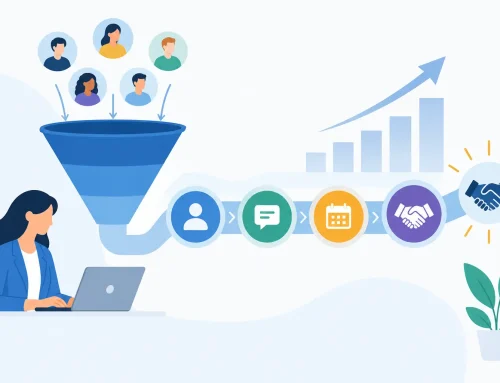
Meeting count is an activity metric. It does not tell you whether your demo engine is creating revenue opportunities. The scorecard should follow meetings through the funnel: show rate, qualification rate, sales-accepted opportunity rate, pipeline created, win rate, and customer acquisition cost.
Review performance by source, campaign, segment, persona, and SDR. You may find that a high-volume channel produces low-quality demos, while a smaller intent-led campaign generates fewer meetings but substantially more pipeline. That is the trade-off that matters. Optimize for economic value, not vanity volume.
A managed outbound partner can help when internal teams lack the time, data, calling capacity, or operational discipline to run this process consistently. Appointment Gurus combines targeted prospecting, intent-led account selection, multichannel outreach, AI-enabled calling, and CRM-connected execution so sales teams can spend more time advancing qualified deals.
The strongest demo-booking programs are not built around a clever subject line or a bigger contact database. They are built around consistent decisions: pursue the right accounts, lead with a relevant problem, respond while intent is active, and hold every meeting source accountable for pipeline. Start by tightening one weak point in that chain this week, then measure whether the change produces conversations your sales team actually wants to have.