A full calendar can hide a serious pipeline problem. If account executives are taking meetings with companies that cannot buy, do not fit the model, or have no active reason to change, activity rises while revenue stalls. Effective lead qualification prevents that waste by deciding who deserves sales attention before the meeting reaches the calendar.
For B2B sales leaders, the objective is not to generate the most leads. It is to create a reliable flow of conversations with accounts that fit the ideal customer profile, show credible buying potential, and have a reason to engage now. That requires a qualification system that is specific enough to protect seller time and flexible enough to capture real opportunities.
What Lead Qualification Should Accomplish
Lead qualification is the process of evaluating whether a prospect is likely to become a worthwhile sales opportunity. In a managed outbound program, it begins long before a prospect replies. Targeting, account selection, intent signals, contact roles, messaging, and discovery all influence meeting quality.
The right standard is not whether someone agreed to a call. It is whether the meeting advances a realistic revenue opportunity. A qualified meeting should give the sales team a clear reason to believe the account has a relevant problem, sufficient fit, and a path to a commercial decision.
That distinction matters because accepted meetings are an incomplete performance metric. A campaign can produce a high acceptance rate by booking anyone willing to talk. It becomes valuable when those meetings convert into opportunities, proposals, and closed revenue.
Start With the Ideal Customer Profile
Qualification fails when the target market is too broad. A vague instruction such as “reach decision-makers in healthcare” creates room for poor-fit accounts, mismatched company sizes, and contacts with no operational need for the offer.
A useful ideal customer profile defines the commercial characteristics of accounts most likely to buy and succeed. This usually includes industry, company size, geography, revenue range, technology environment, operating model, and buyer roles. It should also identify exclusions. If a company cannot support the contract value, operates in a prohibited market, or relies on a system your solution does not serve, it should not enter the outreach sequence.
The profile should be based on revenue evidence, not assumptions. Review your best customers and look for patterns: which segments close fastest, retain longest, expand most often, and create the strongest margins? The goal is to direct outbound investment toward accounts that resemble proven wins, rather than treating every available contact as equally valuable.
For some firms, company size is the strongest predictor. For others, timing matters more. A logistics provider may buy when opening new facilities, while a software company may engage after a funding event, leadership change, or technology migration. The qualification model should reflect what actually drives demand in your market.
Qualify for Fit, Intent, and Access
Strong qualification combines three tests: fit, intent, and access. Fit answers whether the account matches the ideal customer profile. Intent answers whether there is evidence of an active or emerging need. Access answers whether outreach has reached someone who can influence or advance the buying process.
Fit is the baseline. Without it, even a highly engaged lead can consume time with little chance of becoming a customer. Intent makes prioritization smarter. Signals such as relevant content engagement, hiring activity, technology research, growth events, or visible operational change can indicate that a prospect has a reason to evaluate alternatives.
Access is often underestimated. A director may recognize the problem but lack budget authority. An executive may control budget but delegate evaluation. Both can be valuable contacts, but the sales team needs clarity about who is involved and how the decision is likely to move forward.
A practical qualification conversation should establish four things:
- Is the account a clear fit for the solution and commercial model?
- Is there a business challenge, initiative, or trigger connected to the offer?
- Is the contact able to influence the evaluation or introduce the right stakeholders?
- Is there a reasonable next step, even if the final buying timeline is still developing?
Not every prospect will disclose budget, authority, need, and timeline on a first conversation. Treating those fields as a rigid gate can eliminate early-stage opportunities that deserve nurturing. Instead, use them as evidence categories. The more evidence present, the faster the prospect should move toward a direct sales conversation.
Use a Scoring Model That Sales Can Trust
A scoring model gives the team a shared definition of quality. It should be simple enough to use consistently and visible enough that sales, marketing, and outsourced SDR teams can challenge it with real results.
Start by assigning points to firmographic fit, buying signals, engagement, and contact seniority. Then subtract points for clear disqualifiers, such as an unsupported geography, a company below the minimum size, a competitor relationship, or a use case outside your scope. The score does not replace human judgment. It helps the team focus judgment where it has the highest return.
For example, a target account with high intent but a mid-level contact may be worth pursuing if there is a clear route to the buying committee. A perfect-fit company with no visible trigger may belong in a longer-term nurture sequence rather than receiving immediate seller attention. Qualification is not only about rejecting leads. It is about routing each prospect to the right next action.
The key is to validate the model against downstream outcomes. If high-scoring leads rarely become opportunities, the criteria are wrong or being applied inconsistently. If low-scoring leads regularly close, investigate what the model is missing. Revenue teams should review this monthly, not once a year.
Build Qualification Into the Outreach Process
Qualification cannot be a single question asked after a prospect replies. It should shape the entire top-of-funnel engine.
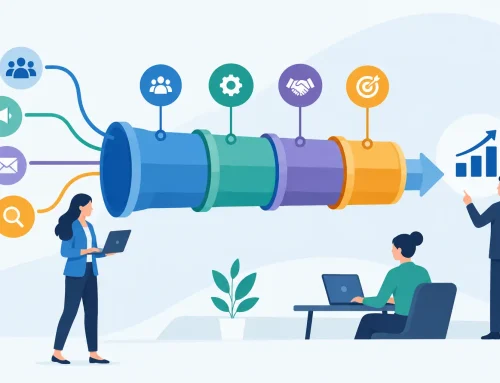
Account research determines who enters the campaign. Intent data and trigger monitoring determine who should be prioritized. Messaging tests whether the prospect recognizes a relevant business issue. Calls and email responses provide context that static data cannot reveal. By the time a meeting is booked, the SDR should be able to provide the seller with a concise handoff: why this account fits, what prompted engagement, who is involved, and what the prospect expects from the conversation.
That handoff is where many programs lose value. A calendar invite with only a name and job title forces the account executive to repeat discovery and creates a poor buyer experience. A useful meeting brief turns an appointment into a prepared sales motion.
Automation can speed research, enrichment, sequencing, and follow-up. AI voice agents can extend calling capacity and help identify interest at scale. But automation should not lower the qualification standard. If technology increases volume without improving account selection and conversation quality, it simply produces more noise.
Measure What Happens After the Meeting
The most common mistake is measuring qualification at the top of the funnel only. Lead volume, reply rates, and booked meetings matter, but they do not tell you whether the program is generating revenue potential.
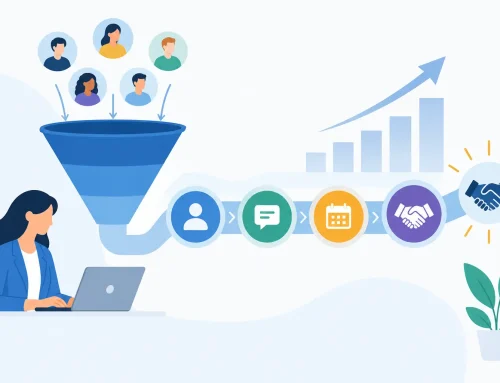
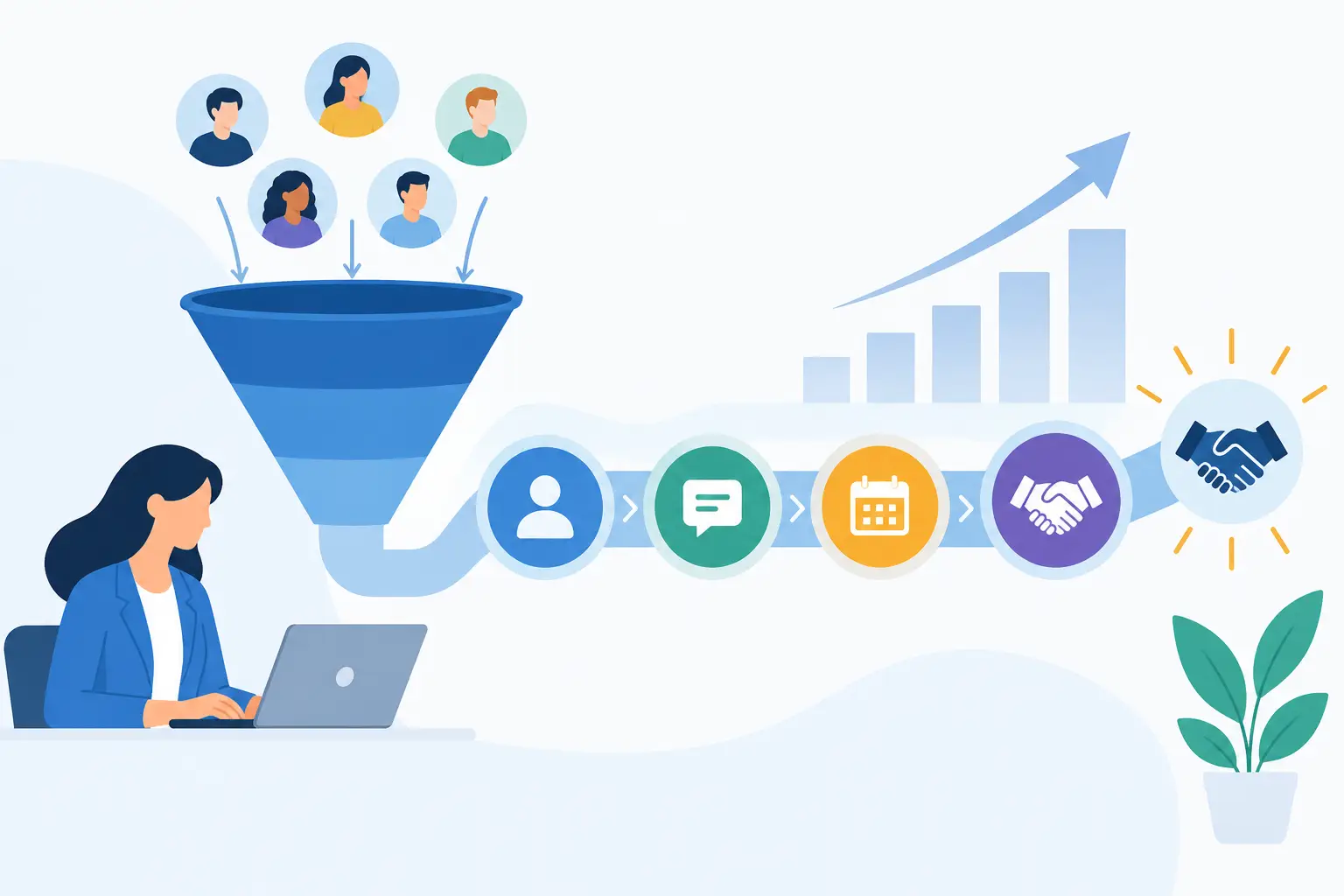
Track the full progression from targeted account to held meeting, sales-accepted lead, qualified opportunity, proposal, and closed business. Also monitor no-show rates, disqualification reasons, sales follow-up speed, and opportunity conversion by segment. These metrics reveal whether the issue sits in targeting, messaging, meeting quality, or sales execution.
Sales feedback needs structure. “Bad lead” is not a useful diagnosis. Require specific reason codes such as wrong company size, no active initiative, insufficient authority, unclear use case, duplicate opportunity, or outside service area. Over time, those patterns improve targeting rules, outreach copy, and qualification scripts.
A healthy program may produce fewer meetings than a volume-first campaign, especially early on. That can be the right trade-off if the meetings produce more opportunities and reduce the burden on closers. The goal is efficient pipeline creation, not calendar density.
When to Outsource Lead Qualification
Many internal teams know how qualification should work but lack the time, systems, or management capacity to run it consistently. Sellers end up sourcing their own accounts, following up on weak responses, and losing selling hours to research. That is costly, particularly when growth targets depend on a steady pipeline.
A managed partner can provide the account research, data enrichment, multichannel outreach, call coverage, and CRM discipline required to maintain standards at scale. The partner should work from your ICP, document its qualification criteria, share meeting context, and report on downstream pipeline performance. If it only reports meetings booked, it is optimizing the wrong outcome.
Appointment Gurus approaches qualification as part of a managed pipeline engine, combining industry targeting, intent data, outreach execution, and CRM-integrated reporting. The aim is to put sales teams in front of buyers who warrant a serious commercial conversation, not to fill calendars for the sake of activity.
The right next step is to examine the last 30 to 50 meetings your team received. Identify which ones became real opportunities, why the others did not, and where those signals could have been caught earlier. That audit will show whether your problem is lead volume or lead qualification – and it will give your team a practical starting point for building a pipeline that sellers trust.