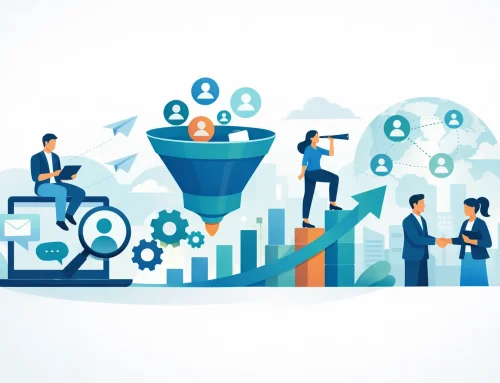
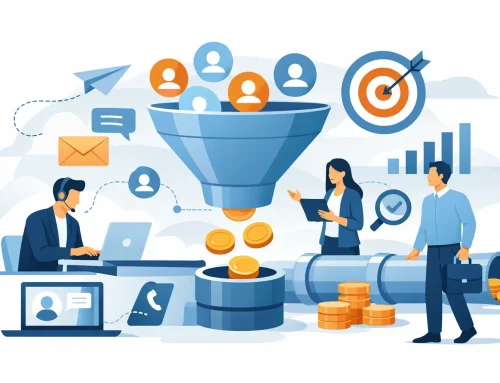
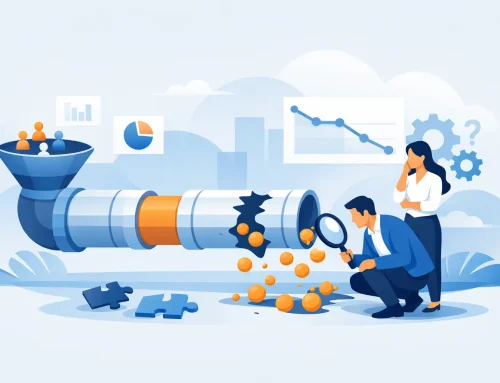
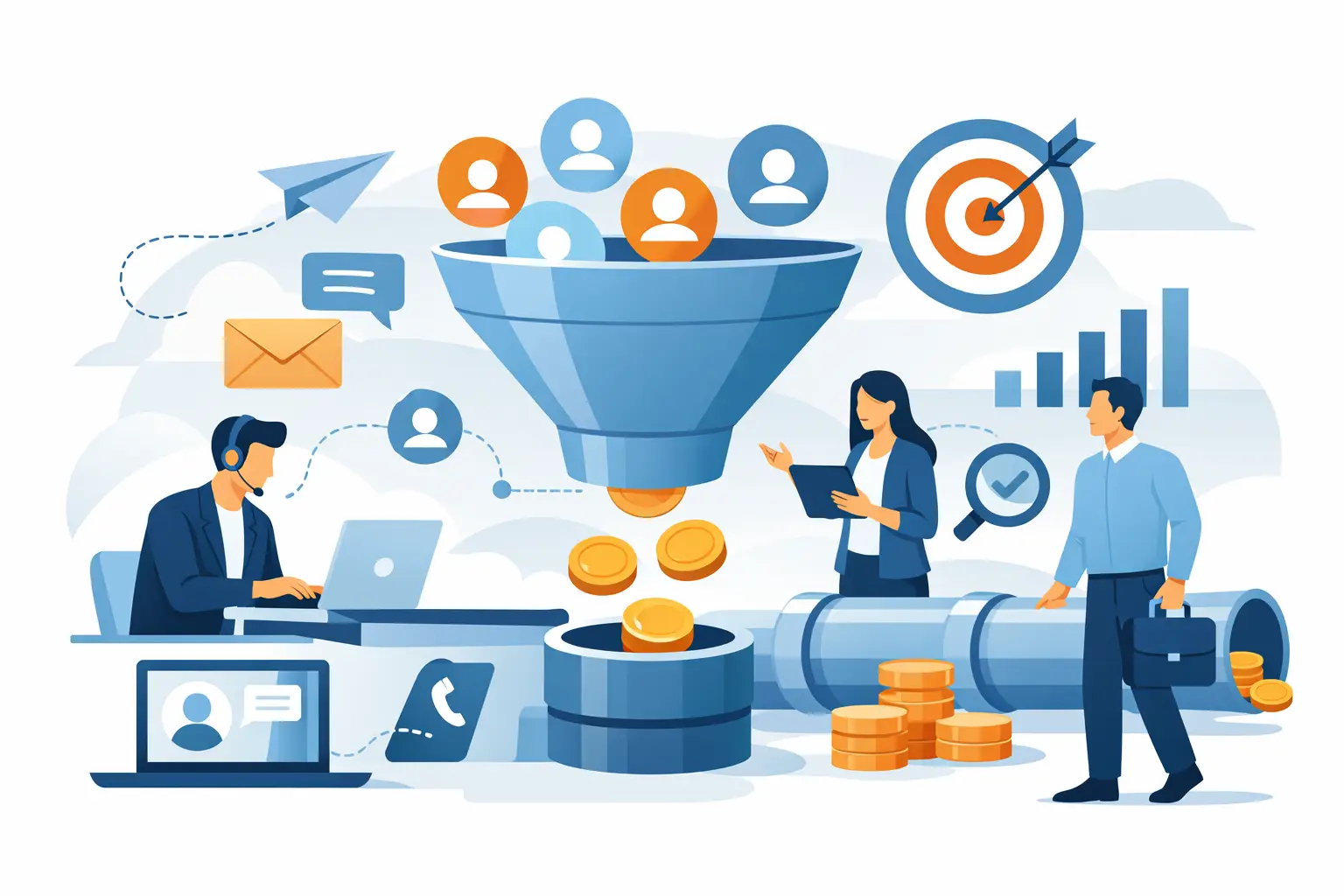
Pipeline problems rarely start at close. They start much earlier, when reps are chasing weak-fit accounts, marketing is sending volume instead of buying signals, and nobody owns top-of-funnel execution with enough rigor. A strong b2b pipeline generation guide is not about doing more activity. It is about building a system that produces qualified meetings consistently, with less waste and better visibility.
For sales leaders, founders, and revenue teams, that distinction matters. More outreach does not automatically create more pipeline. More leads do not automatically create more revenue. The companies that grow predictably are the ones that define who they want, identify who is in market, and run disciplined outreach that turns attention into sales conversations.
What a b2b pipeline generation guide should actually solve
At a practical level, pipeline generation has one job: create enough qualified opportunities for the sales team to hit revenue targets without burning time on poor-fit prospects. That sounds obvious, but many teams still build around disconnected tactics. They buy lists, launch campaigns, test channels, and hope volume compensates for weak targeting.
That approach usually creates three problems. First, lead quality drops and reps lose trust in the funnel. Second, conversion rates become unstable because messaging and targeting are too broad. Third, reporting gets muddy, so leadership cannot tell whether the issue is audience, channel, offer, or follow-up.
A better model is operational. You define the ideal customer profile, segment the market, prioritize in-market demand, and run managed outreach that feeds the CRM with real activity data. That creates a cleaner handoff to sales and a more predictable path from first touch to booked meeting.
Start with the numbers, not the tactics
Before choosing channels or tools, work backward from revenue. If your average closed-won deal value is $30,000 and your close rate from qualified opportunity is 20%, you need five qualified opportunities to generate one deal. If you need 10 new deals in a quarter, you need roughly 50 qualified opportunities. From there, you can estimate how many meetings, conversations, and engaged accounts are required at the top of the funnel.
This matters because pipeline generation without math becomes guesswork. Too many teams launch outreach with no clear benchmark for account volume, contact coverage, meeting targets, or required conversion rates. Then they label campaigns a success or failure based on anecdote.
A revenue-backed model gives you a real operating plan. It also helps you spot where the bottleneck actually is. Sometimes the issue is not lead flow. Sometimes it is weak meeting conversion, poor discovery, or slow sales follow-up. Pipeline generation can only do its job if the rest of the process is built to capture value.
Define your ICP with enough precision to be useful
A vague ICP creates vague results. Saying you sell to healthcare, fintech, or logistics is not enough. You need to know which company sizes, buyer roles, use cases, trigger events, and commercial conditions make an account worth pursuing.
The strongest ICPs combine firmographics with buying context. That means industry, headcount, revenue range, geography, tech stack, and business model, but also signs that the account is likely to act. A recent funding event, hiring pattern, expansion initiative, compliance pressure, or operational shift can all signal stronger timing.
This is where many internal teams struggle. They know who can buy, but not always who is most likely to buy now. That gap is expensive. It leads to bloated target lists, generic messaging, and a lot of activity pointed at accounts with no real urgency.
Use intent and trigger data to improve timing
The difference between broad outbound and effective pipeline generation is often timing. When you reach the right account too early, you get polite indifference. When you reach them too late, they are already in a sales cycle with someone else. Timing will never be perfect, but intent and trigger data improve the odds.
Intent signals can come from content consumption, category research, web behavior, ad engagement, event participation, or changes in business activity. Trigger events can include leadership changes, product launches, territory expansion, mergers, compliance deadlines, or shifts in vendor strategy. These signals help you prioritize accounts that are showing movement instead of treating every prospect as equally ready.
There is a trade-off here. Intent data is useful, but it is not magic. Weak intent without a strong ICP can still create noise. The best results come from combining fit and timing, not choosing one over the other.
Build multichannel outreach around response, not volume
A good outreach sequence should create conversations, not just impressions. That means your channel mix needs to reflect how your buyers actually respond. For many B2B teams, email alone is no longer enough. Inbox competition is too high, and generic sequences get ignored quickly.
The stronger approach is multichannel. Email, phone, AI-assisted calling, LinkedIn, retargeting, and webinar follow-up each play a role, but they should work together instead of operating as separate campaigns. A prospect who ignores the first email may respond to a call. A contact who does not answer the phone may engage after seeing relevant content or ad reinforcement. Repetition matters, but so does variation.
Messaging also needs to stay commercial. Buyers do not care that you are reaching out. They care whether you understand their operating problem and can tie your offer to a measurable result. Short, specific copy usually outperforms long value statements. If your message cannot explain who you help, what problem you solve, and why now in a few lines, it is probably too soft.
Why managed execution often beats building in-house
This is where strategy meets bandwidth. Many companies understand what good pipeline generation looks like, but they do not have the internal capacity to run it well. SDR hiring is expensive. Ramp time is slow. List building, sequencing, personalization, testing, and CRM hygiene all require management attention that most sales leaders would rather spend on closing and coaching.
That is why outsourced pipeline generation can make financial and operational sense. A managed partner can bring targeting, tooling, data, outreach execution, and reporting into one system. Instead of building the entire top-of-funnel engine internally, you plug into an existing process designed to produce qualified meetings at scale.
It is not the right fit for every company. If you already have a high-performing SDR function with strong data discipline and clear coverage, an external team may be redundant. But if your pipeline is inconsistent, your reps are prospecting instead of selling, or your current outbound lacks structure, managed execution can shorten the path to results.
The role of CRM integration in pipeline quality
A pipeline program is only as useful as the data behind it. If outreach activity, lead status, meeting outcomes, and conversion stages are not tracked cleanly in the CRM, leadership loses visibility fast. You cannot optimize what you cannot see.
CRM integration is not a technical afterthought. It is central to execution. It ensures account ownership is clear, follow-up does not slip, and reporting reflects actual funnel performance instead of channel assumptions. It also helps marketing and sales stay aligned on definitions. A lead is not the same as a qualified meeting, and a qualified meeting is not the same as pipeline.
This is especially important when multiple channels are involved. Without tight process control, duplicate outreach, stale records, and poor attribution can undermine an otherwise solid program. Clean execution is often the hidden advantage behind stronger conversion rates.
What to measure in a b2b pipeline generation guide
The best teams do not obsess over one metric. They watch the full chain. Open rates and click rates can be useful directional signals, but they are not enough. The metrics that matter most are positive reply rate, connect rate, booked meeting rate, show rate, sales-accepted opportunity rate, pipeline value created, and eventual revenue contribution.
Watch speed as well. How long does it take to move from first touch to meeting? How quickly are inbound and outbound responses handled? How many meetings stall because follow-up is late or qualification is weak? Pipeline generation is not just about volume. It is about throughput.
If one stage underperforms, fix that stage instead of resetting the whole strategy. Low response may signal targeting or messaging issues. High meeting volume with low acceptance may point to qualification problems. Good meetings with low pipeline conversion may indicate a sales process issue. Precision beats panic.
A practical operating model for predictable pipeline
The most reliable model is simple on paper and disciplined in practice. Start with a narrow, well-defined ICP. Layer in intent and trigger signals to prioritize timing. Run coordinated multichannel outreach with messaging tied to business outcomes. Track every meaningful touchpoint inside the CRM. Review conversion rates weekly, not just monthly, and adjust targeting, copy, and channel emphasis based on evidence.
This is also where specialized partners can create leverage. Companies like Appointment Gurus are built for this exact operational gap – replacing scattered prospecting efforts with a managed top-of-funnel engine that targets the right accounts, engages them across channels, and feeds sales teams qualified meetings instead of raw lead volume.
Pipeline generation works when it stops being treated as a side task and starts being managed like a revenue function. If your team wants more qualified conversations, the answer is rarely more randomness. It is better targeting, better timing, and tighter execution sustained long enough to compound.