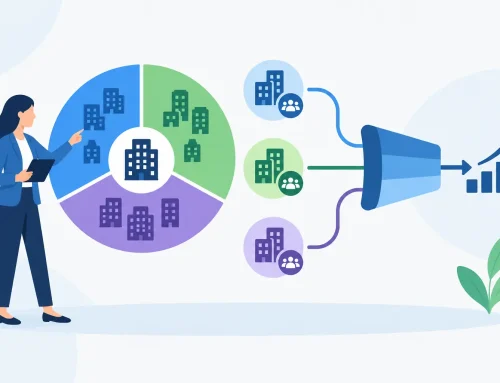
A lead can look qualified on paper and still die in the gap between form fill and first conversation. The problem is rarely a lack of demand. More often, it is unclear ownership, slow follow-up, or a lead sent to the wrong rep. This lead routing guide explains how B2B teams can turn lead assignment into a controlled revenue process rather than a daily CRM cleanup exercise.
For sales leaders, routing is not an administrative detail. It determines whether high-intent prospects receive a relevant response while interest is still active. Get it right, and your team books more qualified meetings without adding more lead volume. Get it wrong, and paid media, outbound activity, webinars, and intent data produce records instead of pipeline.
What lead routing should accomplish
Lead routing is the process of assigning an inbound or outbound response opportunity to the right person, team, or workflow based on predefined criteria. Those criteria may include territory, company size, industry, account ownership, buying intent, product line, lead source, or engagement level.
The goal is not simply to distribute leads evenly. Equal distribution can be useful for a high-volume sales motion, but it often ignores the factors that determine conversion. A 500-person healthcare company researching a specific solution may require a different response than a small business downloading a general guide. Routing should create the fastest credible path from signal to sales conversation.
A strong system does four things at once. It identifies priority, confirms ownership, triggers the right follow-up action, and makes performance visible in the CRM. When one of those pieces is missing, lead leakage follows.
Start with qualification before assignment
Routing rules cannot fix a weak definition of a qualified lead. Before building automation, sales and marketing leaders need agreement on which leads deserve immediate human follow-up and which should enter nurture, qualification, or disqualification workflows.
For most B2B organizations, the core qualification inputs are fit, intent, and timing. Fit asks whether the account resembles the ideal customer profile. Intent measures whether the prospect is showing meaningful buying behavior, such as visiting pricing pages, comparing vendors, attending a product-focused webinar, or researching relevant topics. Timing reflects whether there is a likely active project, budget cycle, or business trigger.
These signals should carry different weight depending on your motion. An enterprise sales team may prioritize account fit and existing account coverage. A high-velocity SaaS team may prioritize form conversion and product engagement. Neither approach is universally correct. The right model reflects your average deal size, sales cycle, capacity, and conversion data.
Avoid routing every contact with a business email directly to an account executive. That creates a full calendar of low-value conversations and encourages reps to ignore new assignments. Instead, establish clear tiers. High-fit, high-intent leads should receive immediate outreach. Leads with strong fit but weaker intent may go to an SDR sequence. Low-fit leads can be nurtured or filtered out before they consume sales capacity.
Build routing rules around revenue reality
The most effective lead routing systems are simple enough to audit and specific enough to protect valuable opportunities. Start with the rules that have the greatest impact on speed and conversion.
Route by account ownership first
If an account already has an active opportunity, customer relationship, named account owner, or open prospecting sequence, preserve that ownership. Sending a new contact from the same company to a different rep creates confusion for the buyer and friction inside the sales team.
Account matching should happen before round robin assignment. A contact may be new, but the company may already be known. This is especially important in complex B2B sales where multiple stakeholders influence the same purchase.
Use territory and industry where expertise matters
Geography is still relevant when territories, compliance requirements, or local coverage shape the sales process. Industry routing matters when your buyers expect informed conversations about healthcare workflows, financial regulations, IT environments, or logistics operations.
Do not create overly narrow routing branches unless your volume supports them. A specialized queue with only a few leads per month can slow response times and leave coverage gaps. In that situation, route to a trained generalist with industry playbooks rather than waiting for a single expert.
Treat intent as a service-level trigger
Intent should influence not only who receives a lead but how quickly they act. A target account researching your category, returning to key pages, or responding to outbound outreach should not wait in the same queue as a cold content download.
Set practical response standards. For example, a high-intent demo request may require outreach within five minutes during business hours, while a webinar attendee may receive same-day follow-up based on engagement and account fit. The exact window depends on your team and market, but the standard must be measurable.
Design the handoff, not just the assignment
A lead assignment without context is a task, not a sales advantage. The assigned rep or SDR should see the information needed to start a relevant conversation immediately. That includes source, campaign, account details, key engagement activity, intent topics, qualification notes, prior outreach, and the next required action.
The handoff also needs a clear acceptance rule. If a rep does not accept or act on a high-priority lead within the agreed window, the system should escalate the record to a manager or reroute it to available coverage. This prevents leads from sitting untouched because someone is in meetings, on vacation, or focused on older opportunities.
Speed matters, but quality still matters. An automated email sent seconds after a form completion can feel generic if it ignores what the buyer requested. Use automation to create urgency and consistency, then give sellers the context to personalize the first real interaction.
Create a lead routing guide your team will follow
Your documented process should be short enough for new team members to use and detailed enough to resolve disputes. It should define lead stages, qualification thresholds, routing logic, ownership exceptions, service-level expectations, and escalation paths.
Include examples for the situations that cause the most confusion: a lead from an existing customer, a contact from a named account, duplicate records, a prospect outside the target market, a lead assigned to an unavailable rep, and an account with multiple product interests. These are the cases where informal decision-making usually creates delays.
The guide should also name one accountable owner for routing operations. Marketing operations may manage source data and automation. Sales operations may manage territories and CRM assignment rules. SDR leadership may own response compliance. All three can contribute, but one person must be responsible for resolving broken workflows quickly.
Measure routing performance at the stage that matters
Many teams only measure total lead volume and meetings booked. Those numbers are useful, but they hide where the process is failing. Track performance from the moment a lead enters the system through the first sales action and eventual opportunity outcome.
Watch lead response time, assignment-to-acceptance time, contact rate, meeting conversion rate, opportunity conversion rate, and pipeline created by source and routing path. Compare results by rep, territory, industry, campaign, and lead tier. If high-intent leads are converting poorly, the issue may be targeting, messaging, qualification, or follow-up speed. The data should help you isolate the cause.
Also measure reassignment rates. Frequent reassignment is a warning sign that ownership rules are unclear, account matching is weak, or your routing criteria do not reflect how the sales team actually sells.
Where managed prospecting improves routing
Lead routing becomes harder when multiple channels produce demand at once. Paid campaigns, website forms, intent data, AI calling, webinar registrations, and outbound replies can each create different signal quality and urgency. Without a coordinated process, internal teams spend valuable time sorting records instead of advancing opportunities.
This is where a managed top-of-funnel partner can add operational value. Appointment Gurus combines targeting, intent signals, multichannel outreach, and CRM-integrated execution so qualified buying activity is identified, prioritized, and moved toward a sales conversation with less internal management overhead.
The right setup depends on your sales model. Some companies need immediate routing to account executives. Others need an SDR qualification layer before a meeting reaches the closing team. The common requirement is discipline: every valuable signal needs a defined owner, a deadline, and a next action. Build that into your process, then review it as closely as you review pipeline coverage.