Your account executives should not spend their best selling hours dialing cold lists, leaving generic voicemails, and chasing prospects who were never a fit. This AI voice outreach guide explains how B2B teams can use conversational calling to create qualified meetings, speed up follow-up, and give closers more time with real buying opportunities.
AI calling is not a shortcut around sales strategy. It is a way to execute a defined strategy with more consistency, coverage, and visibility than most internal SDR teams can sustain on their own. The results depend on who you call, why you call them now, what the agent says, and how quickly your team handles a positive response.
Why AI voice outreach belongs in a B2B pipeline engine
Email remains essential, but inboxes are crowded and response cycles can drag for weeks. A well-timed call introduces a human-like conversation into the outreach sequence, creates faster feedback, and gives prospects a direct way to qualify themselves. For sales leaders managing pipeline targets, that speed matters.
AI voice agents can place calls at scale, handle first-touch conversations, answer common questions, capture qualification details, and route interested prospects into a calendar or CRM workflow. That does not mean every prospect should receive the same automated call. The advantage comes from combining calling capacity with precise audience selection and relevant messaging.
For example, a logistics software company may call operations leaders showing active interest in warehouse automation topics. A financial services firm may prioritize advisors or firms exhibiting signals around compliance modernization. The call has a reason to exist beyond “checking in.” That context raises the odds of a productive conversation and protects your brand from irrelevant outreach.
AI voice outreach guide: Start with the right call objective
The biggest operational mistake is asking an AI agent to do too much. A first call should not attempt a full discovery, a product demo, and a contract conversation. Its job is usually simpler: verify fit, surface interest, and secure the appropriate next step.
Define one primary outcome before building a campaign. For most B2B teams, that outcome is a qualified meeting with a sales representative. In some cases, it may be permission to send information, confirmation of the right contact, or a callback at a specified time. Each outcome requires different talk tracks and reporting.
Set qualification rules before the first call
A meeting is only valuable if it has a realistic path to pipeline. Create clear qualification standards that the AI agent can apply consistently. These typically include company fit, decision-maker role, relevant business need, timing, and willingness to speak with your team.
The rules should reflect your actual ideal customer profile, not a broad wish list. If your sales team closes mid-market healthcare providers with 200 or more employees, do not fill calendars with small firms outside that segment simply because they accept a meeting. Volume without fit creates a false sense of performance and wastes closer capacity.
Agree on what happens when a prospect is interested but not ready. They may enter a nurture sequence, receive relevant content through approved channels, or be scheduled for a later follow-up. A disciplined disposition process keeps those contacts from disappearing after a single conversation.
Use intent and account data to decide who gets called
Calling every record in a database is expensive, noisy, and unnecessary. Prioritize accounts with evidence that a conversation may be timely. Intent data, website engagement, recent funding, hiring activity, technology changes, event attendance, and high-value content engagement can all help determine call priority.
Data quality is equally important. Verify phone numbers, company details, job titles, and account ownership before launch. An AI agent calling the wrong person with the wrong company context will damage credibility faster than a weak email subject line ever could.
The strongest campaigns segment by industry, role, company size, and buying signal. That lets you speak to a recognizable business problem rather than delivering a generic pitch. A CFO and a VP of Operations may care about the same platform for entirely different reasons. Your call logic should account for that.
Build conversations, not scripts that trap prospects
A useful AI voice agent follows a structured conversation, but it should not sound like it is reading a rigid script. Prospects interrupt, ask questions, challenge assumptions, and change direction. The conversation design must anticipate that reality.
Start with a concise introduction, a relevant reason for the call, and a low-friction question. For instance, an agent might reference a business challenge common to the prospect’s industry and ask whether improving a specific process is a current priority. If the answer is no, the agent should exit professionally. If the answer is yes, it can ask a small number of qualifying questions and offer a meeting.
The best call flows include clear paths for common scenarios: interest, lack of interest, bad timing, wrong contact, request for information, voicemail, and a request to call back. They also include escalation rules. If a prospect asks detailed technical, pricing, legal, or contractual questions, the agent should not invent an answer. It should capture the question and route the conversation to a qualified person.
Keep the language commercial but natural. Avoid inflated claims, long company descriptions, and questions that sound like a survey. The prospect needs to understand the value of continuing the conversation within the first few seconds.
Connect calls to a multichannel follow-up plan
Voice outreach performs better when it is part of a coordinated sequence. A prospect may see a relevant email, receive a call, and later respond to a follow-up message once the problem is familiar. The calls should reinforce your campaign message, not operate as an isolated activity.
Timing matters. If a prospect asks for details, send the agreed information promptly and schedule the next action in the CRM. If they request a callback, honor the requested window. If they do not answer, vary call times and coordinate follow-up without creating excessive contact pressure.
Your operating model should define four things clearly:
- How many call attempts are appropriate for each segment and campaign.
- What email or message follows a live conversation, voicemail, or missed call.
- When qualified prospects transfer to an account executive or book directly on a calendar.
- How dispositions, notes, recordings, and next steps sync to the CRM.
Without CRM integration, teams lose the operational advantage of AI calling. Sales reps need context before the meeting: who spoke with the prospect, what pain point was mentioned, which objections appeared, and what follow-up was promised. That information turns a booked appointment into a more prepared sales conversation.
Protect compliance, trust, and brand reputation
AI voice outreach should be governed as carefully as any other outbound channel. Calling rules vary by audience, geography, phone type, industry, consent status, and campaign design. Work with qualified legal and compliance advisors to establish policies for your organization, including disclosure practices, calling windows, do-not-call handling, recording requirements, and data retention.
Operational safeguards matter just as much. Maintain suppression lists, honor opt-out requests immediately, monitor calls for accuracy and tone, and review outcomes regularly. Do not use an agent to pressure people, obscure who is calling, or make claims your business cannot support.
There is also a brand judgment involved. Some senior buyers will welcome a brief, relevant call. Others will prefer email or a human-led conversation. Test by segment, listen to feedback, and adapt the channel mix accordingly. Scale should never outrun quality control.
Measure pipeline impact, not just dials and meetings
High call volume is not a growth metric. A calendar full of poorly qualified conversations is not a pipeline strategy. Track activity metrics, but judge the program by the quality and revenue potential it produces.
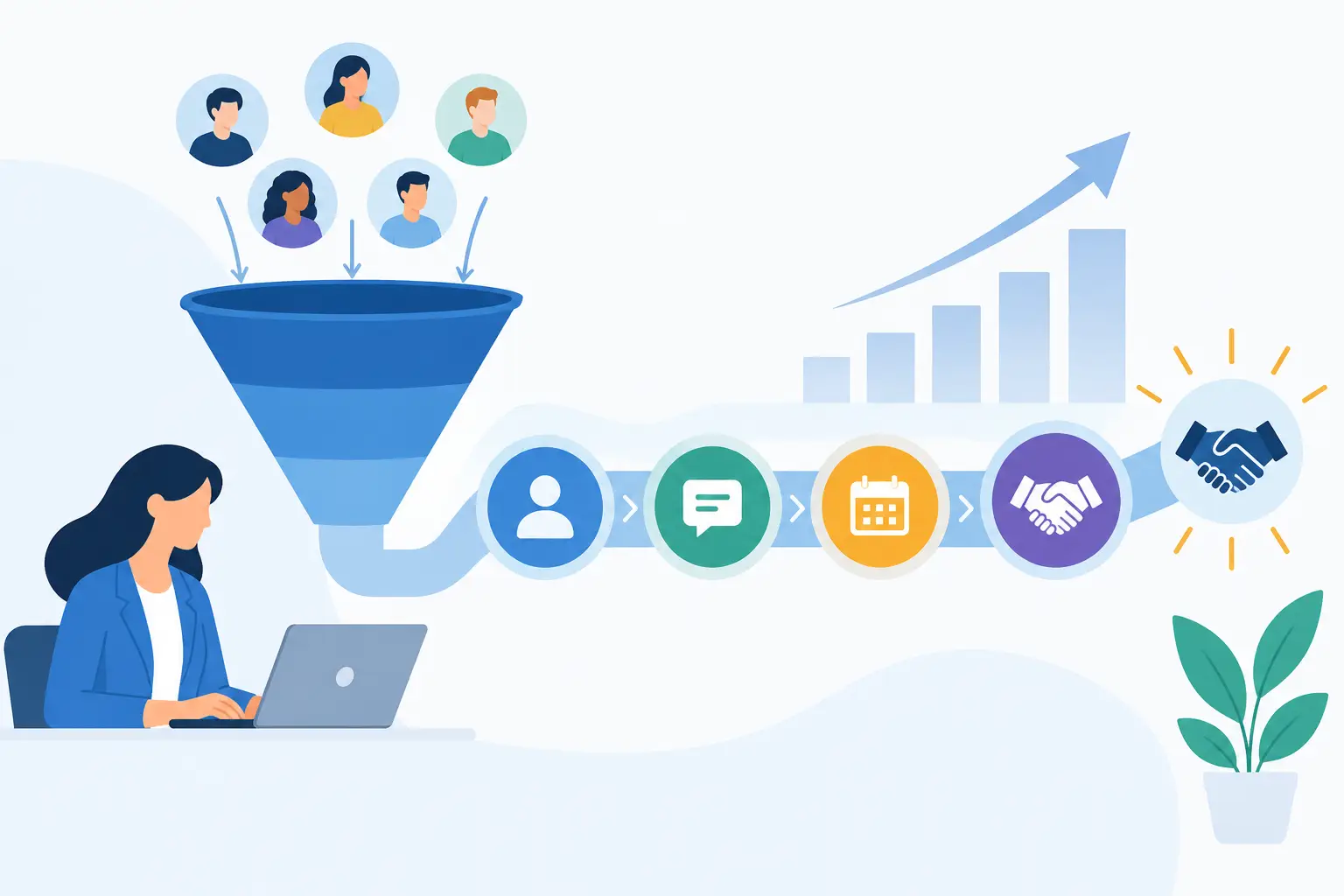
Start with connect rate, conversation rate, qualification rate, meeting-booked rate, show rate, and speed to follow-up. Then follow those meetings through the funnel: sales-accepted opportunities, pipeline created, win rate, deal value, and customer acquisition cost.
Review performance by industry, persona, account tier, call time, campaign message, and intent signal. You may find that a lower-volume segment produces significantly more pipeline because the buyer need is stronger. That insight should change budget allocation and agent capacity.
It also helps to compare AI-led calls with the alternative. If internal SDRs are spending hours on repetitive dialing, calculate the cost of that activity alongside missed follow-up and inconsistent coverage. The goal is not to replace thoughtful sales work. It is to move repetitive top-of-funnel execution into a system that can be measured, improved, and managed.
For companies that need the process built and operated without adding internal management overhead, Appointment Gurus combines targeting, intent signals, AI calling, multichannel outreach, and CRM-connected execution around the outcome that matters: qualified sales conversations.
The right first move is not to call more people. It is to identify the accounts most likely to care, give them a credible reason to engage, and make every positive signal move quickly toward a well-prepared sales meeting.