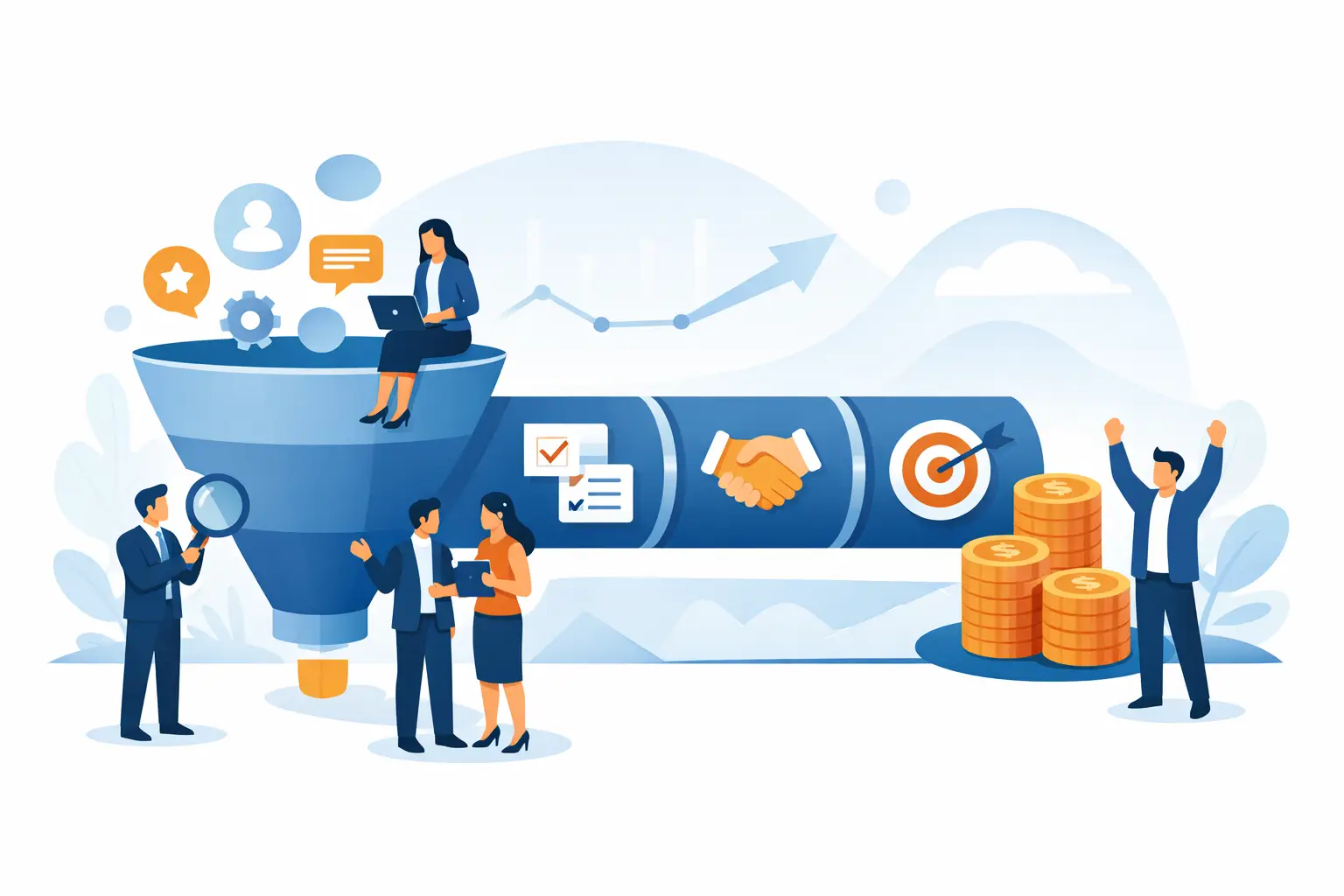
A full calendar can hide a weak pipeline. If your reps are busy but qualified opportunities are thin, the issue usually is not effort. It is structure. Knowing how to build sales pipeline means creating a repeatable system that consistently puts the right buyers into active conversations, not just generating more activity for the sake of it.
For most B2B teams, pipeline problems start long before the first sales call. Targeting is too broad, outreach is inconsistent, follow-up breaks down, and marketing hands over names that were never likely to convert. The result is familiar – too much time spent chasing, too little revenue certainty, and a sales team doing prospecting work instead of closing.
How to build sales pipeline starts with target definition
Pipeline quality is set at the top. If your ideal customer profile is vague, every downstream metric gets worse. Reply rates fall, meetings get softer, and close rates become unpredictable.
A strong ICP is not a generic description like mid-sized companies in tech. It should include industry, company size, geography, buyer roles, operating model, and clear signs that the account can actually buy. In some sectors, compliance requirements matter. In others, hiring velocity, funding status, or installed tech stack are stronger indicators. The point is to narrow your addressable market to the accounts most likely to convert and stay.
This is where many teams hesitate because narrowing feels like reducing opportunity. In practice, the opposite is true. Better targeting creates more relevant messaging, higher response rates, and cleaner handoffs to sales. A smaller qualified universe usually outperforms a larger list filled with low-fit accounts.
Use intent, not just firmographics
Firmographics tell you who fits on paper. Intent tells you who may be in market now. That difference matters because timing drives pipeline velocity.
If you can identify accounts researching related solutions, showing buying signals, engaging with relevant content, or demonstrating operational change, your outreach becomes far more efficient. Not every business needs the same level of intent tooling, but every serious pipeline program needs some way to prioritize accounts based on likelihood to engage.
When teams ignore timing, they end up treating every lead the same. That creates bloated lists, wasted touches, and weaker conversion economics.
Build a contact strategy around buying committees
In B2B sales, one contact is rarely enough. Deals move through multiple stakeholders, and pipeline gets stuck when outreach is limited to a single title.
A practical pipeline strategy maps each target account to a small buying committee. That may include the decision-maker, an operational owner, a financial approver, and a potential internal champion. The exact mix depends on deal size and sales cycle complexity, but the logic stays the same. You are not trying to find one person who says yes on the first touch. You are building account coverage that creates more paths into a conversation.
This approach also improves resilience. If one contact changes roles, ignores outreach, or is not a real buyer, the opportunity does not disappear.
Message by role, not by account list
The same company can contain very different priorities. A founder may care about growth speed. A sales leader may care about meeting volume and conversion quality. An operations leader may care about CRM visibility and execution overhead.
If your outreach sounds identical across every persona, expect lower engagement. Messaging should reflect the outcomes each stakeholder owns. That does not mean writing from scratch every time. It means building a clear message architecture with role-specific value points, proof, and objections already considered.
Create a multichannel outbound engine
If you want predictable pipeline, single-channel outreach is rarely enough. Email-only programs are easy to ignore. Call-only programs are hard to scale cleanly. Social-only programs often generate attention without urgency.
The strongest systems combine channels so each touch reinforces the next. A prospect may ignore the first email, recognize the name from a call, then respond after a follow-up tied to a relevant trigger. That sequence works because repetition builds familiarity and timing creates relevance.
A practical outbound engine usually includes email, calling, LinkedIn, and targeted retargeting or paid support where appropriate. Not every market needs the same mix. Senior financial buyers may respond differently than healthcare operators or logistics executives. The goal is not to force every channel into every campaign. It is to match channel strategy to buyer behavior.
Consistency matters more than volume. A disciplined 15-day sequence with smart touches and real personalization will usually outperform a bloader spray-and-pray program. More activity does not automatically mean more pipeline.
Make qualification part of pipeline creation
A meeting is not pipeline just because it landed on a calendar. If the account is a poor fit, lacks urgency, or has no realistic path to purchase, that meeting adds noise instead of value.
That is why qualification should happen before opportunities are passed to account executives whenever possible. At minimum, someone should verify fit, problem relevance, and buying context. For some organizations, SDRs handle this. For others, a managed appointment setting partner does it as part of the front-end process.
The trade-off is straightforward. Tighter qualification can reduce raw meeting count in the short term, but it usually improves pipeline conversion and protects sales team capacity. Loose qualification may produce a bigger top-line activity number, but it burdens closers with weak conversations.
Define what counts as sales-ready
Most pipeline breakdowns are really definition problems. Marketing counts inquiries. SDRs count meetings. Sales leaders want qualified opportunities. If those definitions are not aligned, reporting becomes unreliable and trust breaks down.
Set a clear standard for what sales-ready means in your organization. That could include ICP fit, verified need, role authority, timeline signal, or an identified initiative. The exact criteria can vary, but it needs to be operational, not subjective.
Once that standard is in place, inspect it often. If meeting-to-opportunity conversion is weak, qualification may be too loose. If conversion is strong but volume is low, your targeting may be too narrow or your messaging may need work.
Use CRM discipline to protect pipeline value
You cannot improve what your team cannot see. CRM hygiene is not administrative busywork. It is what allows leadership to spot breakdowns early and make better decisions on capacity, conversion, and forecast health.
Every outreach motion, meeting outcome, stage change, and disposition should be captured consistently. That creates a feedback loop. You can see which industries convert best, which personas respond fastest, which campaigns generate real opportunities, and where pipeline stalls.
Without that visibility, teams end up arguing from anecdotes. One rep says calls work. Another says email is dead. Marketing claims success based on form fills. Sales says the leads are bad. None of that helps if the data structure is weak.
For growth-focused firms, CRM-integrated execution is what turns prospecting into a manageable revenue engine. It is also what makes outsourcing viable. If an external partner cannot plug into your workflow and produce clean reporting, the program will create friction instead of leverage.
Measure the right pipeline metrics
If your only KPI is meetings booked, you will eventually pay for it in wasted sales time. Pipeline should be measured as a progression, not a single event.
The metrics that matter most are usually contact rate, reply rate, meeting set rate, show rate, meeting-to-opportunity conversion, opportunity value, sales cycle movement, and ultimately closed revenue from sourced pipeline. These numbers reveal where the real bottleneck lives. Low replies point to targeting or messaging. Good replies but poor show rates often signal weak qualification or poor handoff. Plenty of meetings but low opportunity creation means the top of funnel is producing noise.
This is where operational rigor separates serious pipeline generation from superficial lead gen. The goal is not to brag about activity. The goal is to create qualified opportunities that move.
Decide what should stay in-house and what should be outsourced
Not every company should build the entire outbound machine internally. Hiring SDRs, training them, sourcing data, managing systems, optimizing campaigns, and maintaining volume all take time and management attention. For some teams, that investment makes sense. For others, it slows growth and distracts leaders from revenue execution.
If your internal team is strong at closing but inconsistent at prospecting, outsourcing top-of-funnel execution can be the faster route to predictable pipeline. A managed model works best when the provider can handle targeting, data, outreach, appointment setting, and reporting inside a process that aligns with your CRM and sales motion.
That said, outsourced support is not magic. It still depends on clear positioning, fast follow-up, and sales leadership alignment. The best results happen when the front end is professionally managed and the closing team is ready to act on qualified demand.
Appointment Gurus is built around that model because many B2B companies do not need more tools. They need a cleaner system for turning fit and intent into booked meetings and measurable pipeline.
How to build sales pipeline that holds up under pressure
A pipeline is not healthy because it looks full in one quarter. It is healthy when it stays consistent across changing markets, rep turnover, and shifting demand. That only happens when targeting is disciplined, outreach is structured, qualification is enforced, and data is clean enough to guide decisions.
The companies that win this game do not treat pipeline as a lucky byproduct of sales effort. They treat it like an operating system. Build that system well, and your team spends less time hunting for conversations and more time closing the right ones.