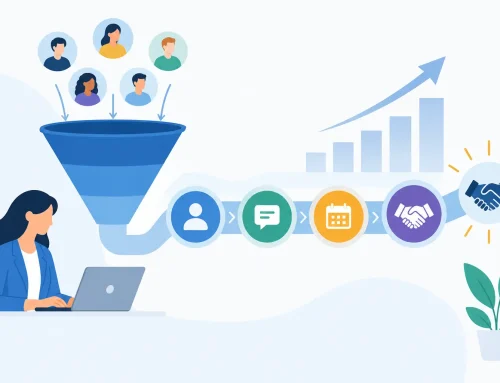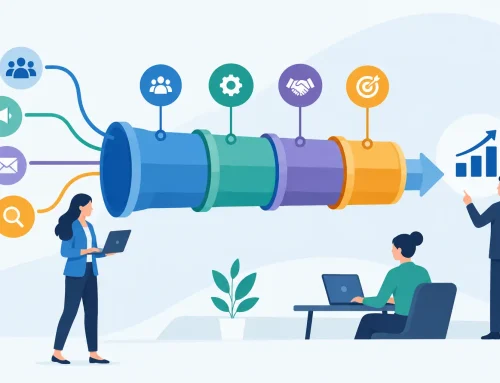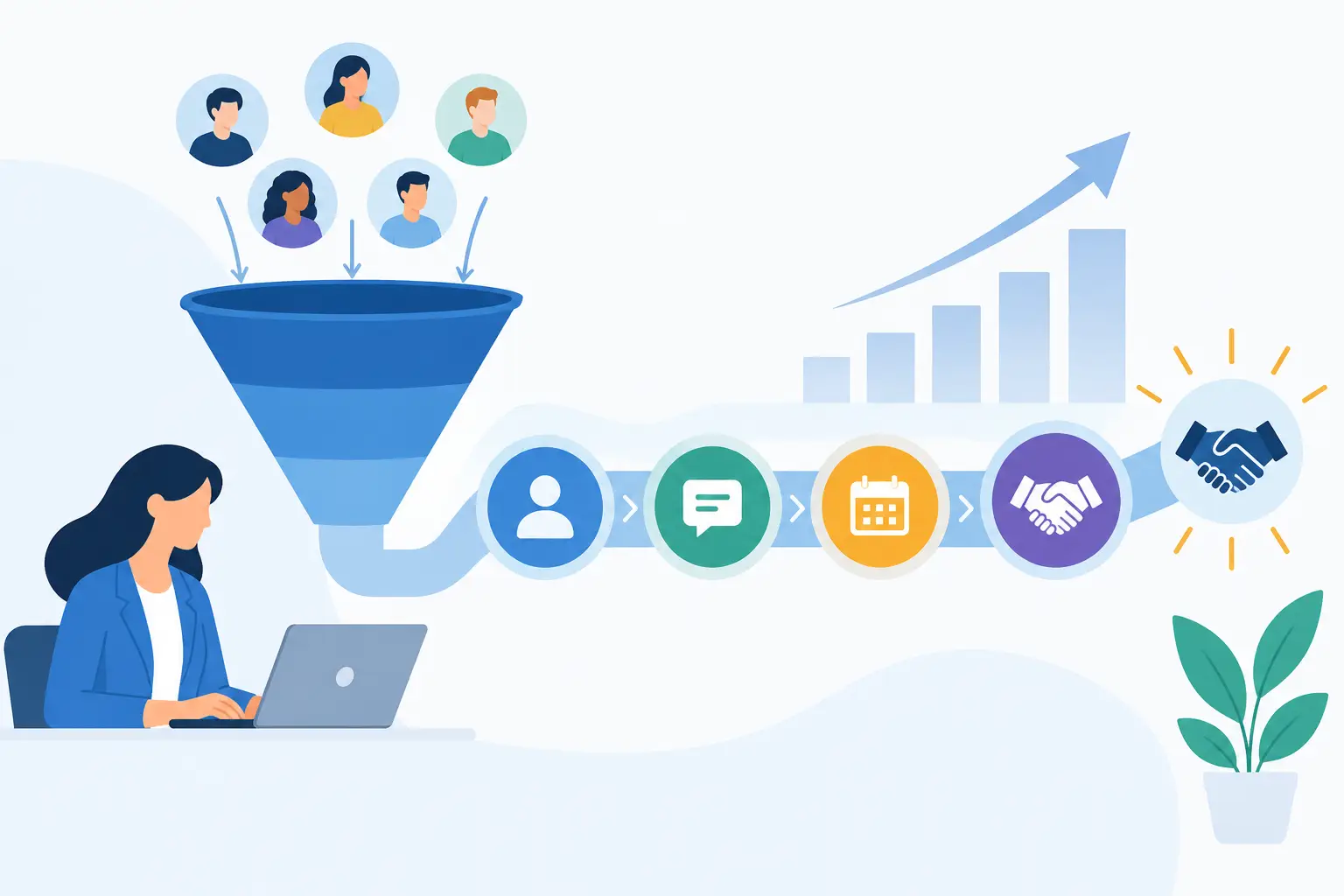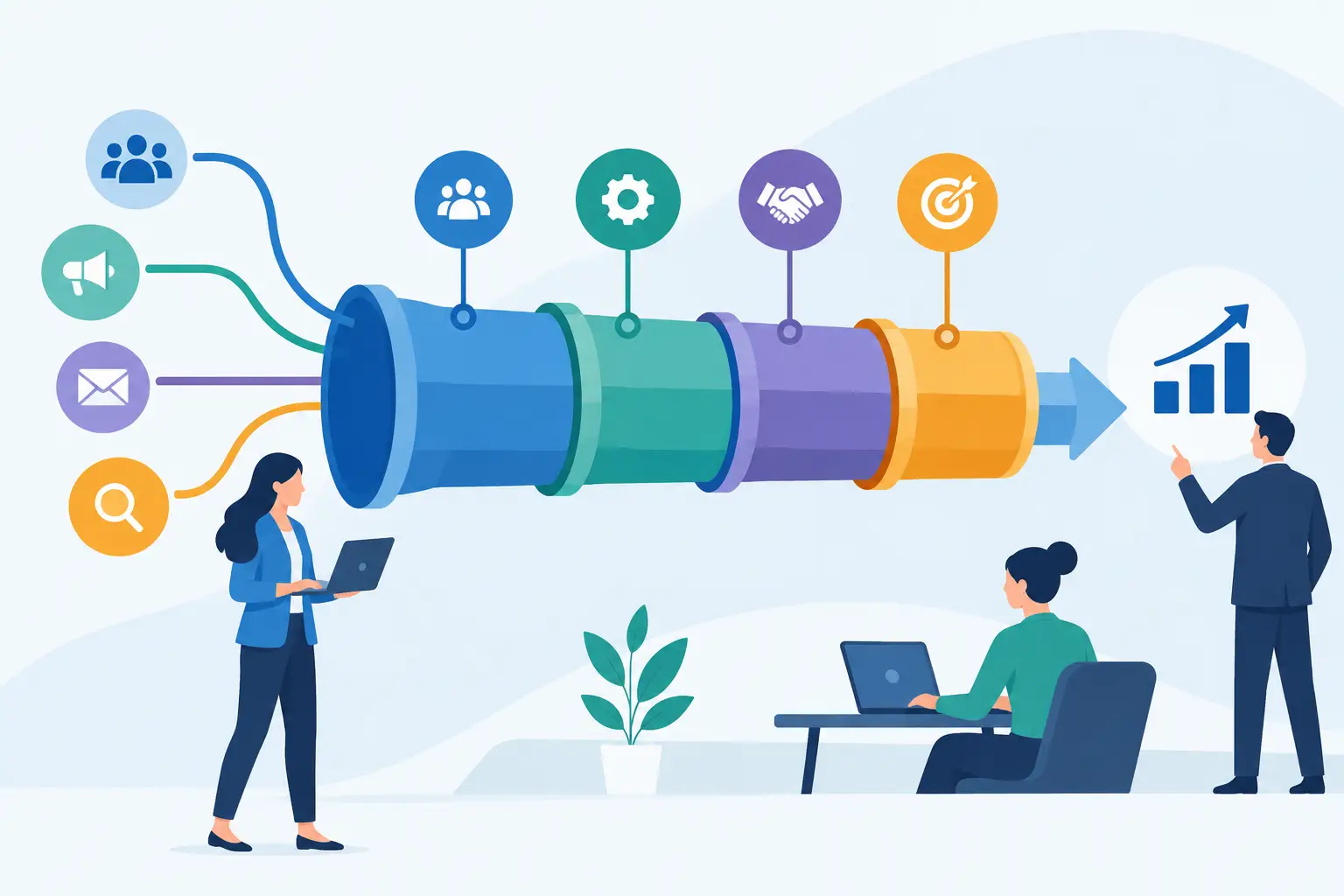
Your best account executive should not spend Monday morning building lists, verifying job titles, and sending first-touch emails. Yet that is exactly where many B2B teams lose selling capacity. To reduce prospecting workload fast, remove the repetitive research and outreach tasks from closers while improving the quality of conversations that reach their calendars.
The goal is not simply to send more messages. It is to build a top-of-funnel operation that consistently identifies the right companies, prioritizes active buyers, starts relevant conversations, and hands sales reps qualified meetings with context. That requires process discipline, better data, and clear ownership.
Why Prospecting Becomes a Sales Bottleneck
Prospecting workload expands when every rep is expected to do every part of outbound. They choose accounts, source contacts, clean data, write messages, make calls, follow up, update the CRM, and attempt to close opportunities. That model can work in the earliest days of a company. It breaks down once pipeline targets increase.
The issue is not that salespeople cannot prospect. The issue is opportunity cost. A closer who spends 15 hours a week on list building and low-probability outreach has 15 fewer hours for discovery, follow-up, proposals, and deal strategy. Pipeline may look busy, but revenue production slows down.
Weak targeting makes the problem worse. When teams work from broad lists instead of a defined ideal customer profile, they spend more time chasing companies that will never buy. Low reply rates then create pressure to increase volume, which adds even more manual work without fixing the underlying issue.
How to Reduce Prospecting Workload Fast Without Cutting Quality
The fastest improvement comes from separating the work that requires seller judgment from the work that can be systemized, automated, or managed by a specialized team. Sales leaders should retain control of positioning, qualification standards, and deal progression. The prospecting engine should handle the repetitive execution around those decisions.
Define a Narrow, Usable Ideal Customer Profile
A useful ICP is operational, not aspirational. “Mid-market technology companies” is too broad to guide an outreach team. A workable profile identifies firmographic, technographic, and buying conditions that indicate a meaningful chance of conversion.
Start with the customers that close faster, retain longer, and produce stronger deal values. Look for patterns in company size, industry, geography, technology environment, trigger events, and the roles involved in a purchase. For example, a logistics software provider may prioritize companies adding distribution centers, hiring supply chain leaders, or investing in warehouse automation.
This focus reduces workload because the team stops debating who belongs in the pipeline. Researchers can build targeted account groups faster, messaging becomes more relevant, and sales reps receive meetings that fit the motion they are built to win.
Prioritize Intent Over Volume
Not every ICP account deserves equal attention. A company can look perfect on paper while having no active need, no budget, or no urgency. Intent data helps distinguish a good-fit company from a good-fit company that is researching a category, showing buying signals, or experiencing a relevant business change.
Intent signals may include increased topic research, technology changes, leadership hires, funding activity, expansion plans, compliance deadlines, or engagement with relevant content. None of these signals guarantees a sale. They do, however, give prospecting teams a reason to prioritize specific accounts and tailor the opening conversation.
This is where many outbound programs become more efficient. Instead of asking SDRs to contact 2,000 generic records, ask them to work a smaller group of accounts with clear fit and timely signals. Lower volume can produce more qualified meetings when relevance improves.
Build a Multichannel Sequence Once
Manual outreach often grows because every rep creates their own process. One sends emails, another calls occasionally, and a third relies on social messages. There is no shared cadence, no visibility into what works, and no reliable follow-up standard.
Create a documented sequence that combines email, phone, social touches, and targeted follow-up. The exact number of touches depends on your market, sales cycle, and buyer seniority. Enterprise prospects may need a longer, more thoughtful cadence. Smaller businesses may respond better to a shorter, direct approach.
The sequence should be consistent enough to scale but flexible enough to use relevant triggers. Automation can schedule touches and track activity, but it should not turn every prospect into a mail-merge recipient. Personalization should focus on the account’s likely business problem, not superficial details pulled from a profile.
Use AI Calling for Speed, Then Route Real Conversations
Phone outreach remains valuable, especially when buyers are difficult to reach through email alone. The constraint is staffing. Traditional cold calling demands time, training, quality control, and constant management. Conversational AI voice agents can help cover initial outreach, qualify basic interest, handle simple responses, and route engaged prospects to the appropriate team.
This approach works best when the agent has a clear purpose. It should confirm relevance, surface timing, collect qualification details, or schedule a next step. It should not attempt to force a complex sale through a scripted exchange.
There is a trade-off. Highly technical, high-value, or sensitive offers may require experienced human callers earlier in the process. AI calling is most effective when it expands coverage and speed while human SDRs focus on nuanced conversations and qualified follow-up.
Keep CRM Hygiene Inside the Process
A prospecting program that creates meetings but leaves incomplete CRM records creates problems for sales leadership later. Reps lose context, attribution becomes unreliable, and pipeline reporting turns into a manual cleanup project.
Every prospecting workflow should push activity, contact details, account information, qualification notes, and meeting outcomes into the CRM. That gives closers a complete view before the first call and gives leaders evidence of what is producing pipeline.
At a minimum, standardize four fields: ICP fit, intent or trigger source, outreach status, and meeting disposition. These fields make it easier to identify which audiences convert, which channels produce responses, and where prospects fall out of the funnel.
Decide What Your Internal Team Should Own
Reducing workload does not mean giving up control. It means assigning work to the team best equipped to perform it. Internal leaders should own market positioning, offer strategy, qualification criteria, sales feedback, and closing. Those inputs determine whether a prospecting engine represents the business accurately.
The execution layer can be managed internally, externally, or through a hybrid model. An in-house SDR team may make sense when you have stable volume, strong sales operations, proven messaging, and the capacity to recruit and coach consistently. A managed appointment setting partner is often faster when pipeline needs are immediate or internal sellers are already stretched.
Appointment Gurus supports this model with industry-specific targeting, intent-led prospecting, multichannel outreach, AI calling, and CRM-integrated execution. The practical advantage is not outsourcing for its own sake. It is giving account executives more time to run meaningful sales conversations while a dedicated team keeps the top of the funnel moving.
Measure Efficiency Before You Celebrate Activity
More calls, emails, and contacts do not automatically mean less prospecting workload. Track the metrics that show whether effort is becoming productive pipeline: meetings booked, meetings held, qualified opportunities created, conversion by segment, cost per qualified meeting, and pipeline value sourced.
Also measure the time reclaimed by closers. If account executives are still researching accounts, correcting data, and chasing no-shows, the system has not solved the workload problem. A strong program gives them prepared meetings, clear notes, and a defined next action.
Review results weekly, not just at the end of a quarter. If a segment is generating replies but no qualified opportunities, adjust the targeting or message. If meetings are qualified but do not progress, inspect the handoff and discovery process. Fast improvement comes from short feedback loops.
The Fastest Path Is Better Division of Labor
Sales teams do not need to work harder to create more pipeline. They need a prospecting system that protects selling time and focuses effort where buyers are most likely to engage. Define the ICP, use intent to prioritize accounts, run disciplined multichannel outreach, and keep every interaction visible in the CRM.
When closers are no longer buried in administrative prospecting, they can do the work only they can do: diagnose business problems, build confidence with stakeholders, and move qualified opportunities toward revenue.