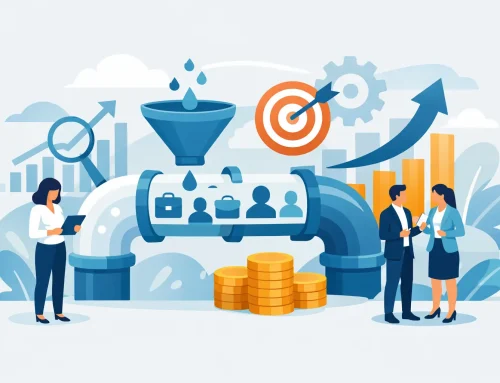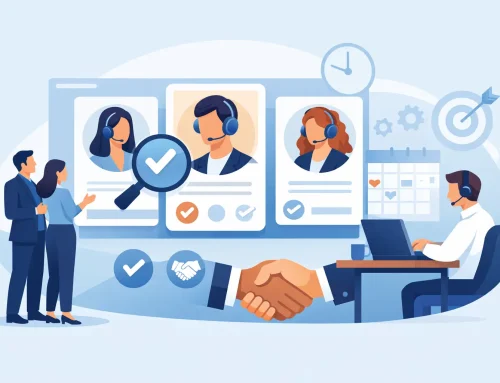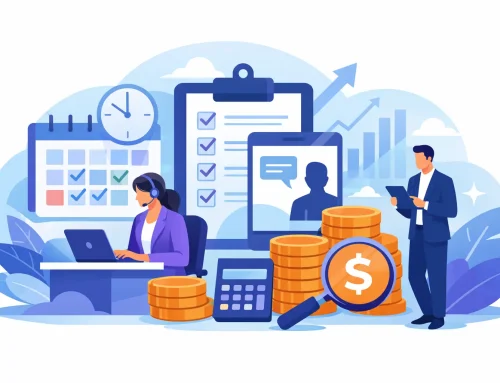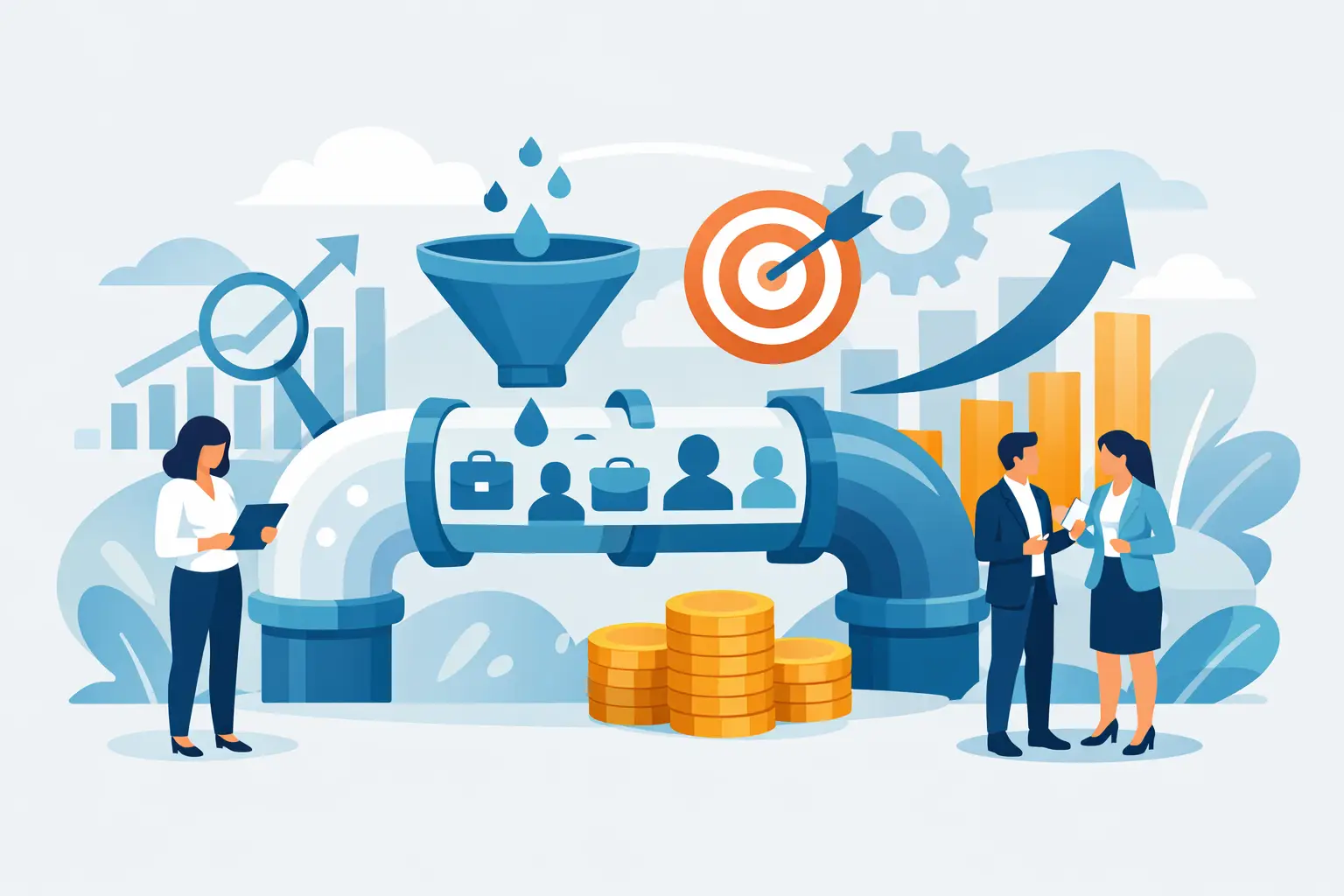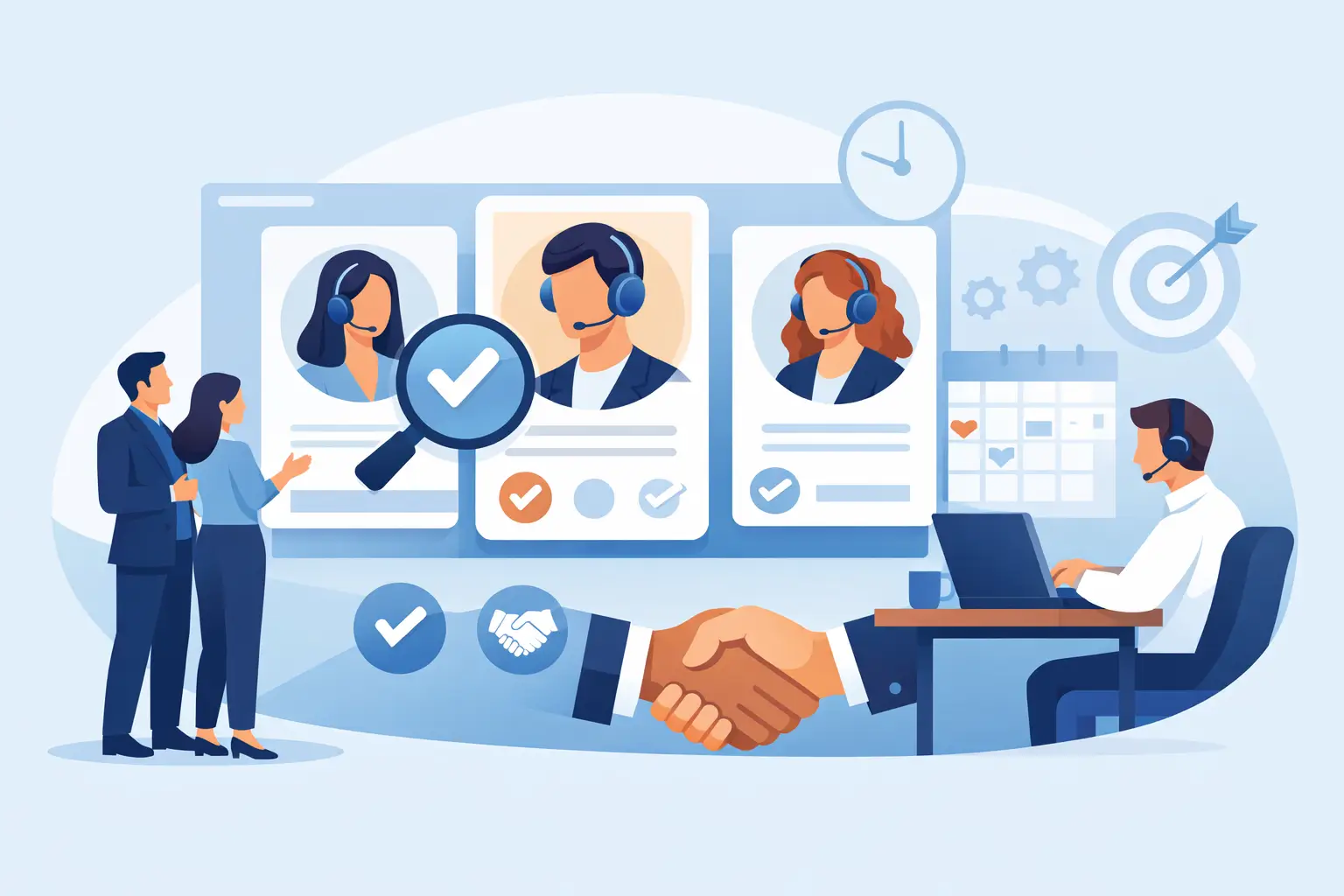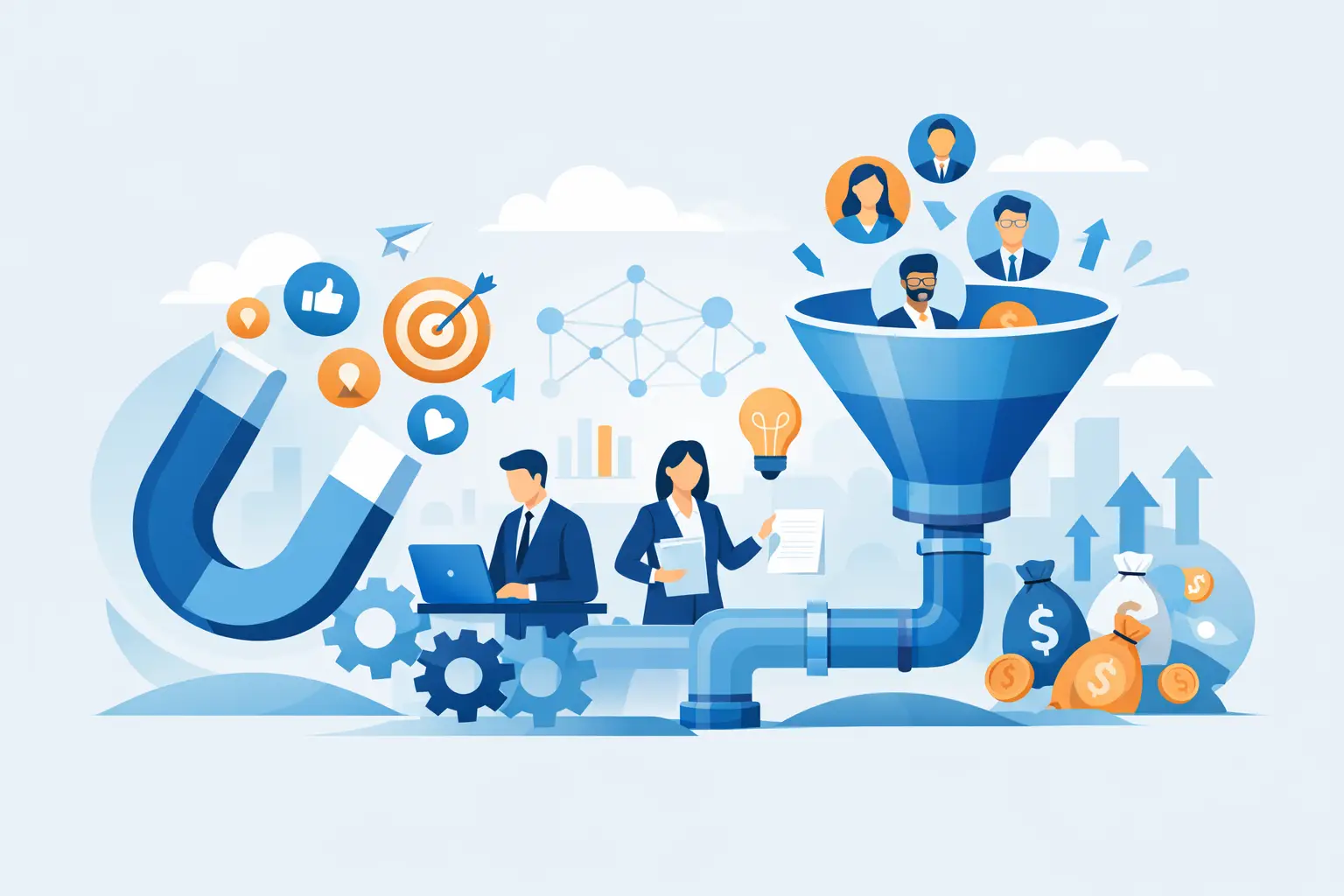
A full calendar is not a pipeline strategy. Sales leaders need meetings with companies that fit the ICP, show real buying signals, and have a problem their team can solve. The best b2b lead generation tactics do not create more activity for activity’s sake. They create a repeatable path from target account to qualified sales conversation.
That distinction matters when internal reps are spending hours building lists, chasing weak replies, and researching accounts that were never likely to buy. The goal is to give closers more time in high-value conversations while a disciplined top-of-funnel engine handles targeting, outreach, qualification, and follow-up.
1. Build a Narrow, Usable Ideal Customer Profile
Most lead generation programs fail before the first message goes out because the target market is too broad. “Mid-market healthcare companies” is not a working ICP. It is a category containing organizations with different buying cycles, operating models, budgets, technology stacks, and decision-makers.
A usable ICP defines the accounts most likely to convert and stay valuable after the sale. Start with firmographic criteria such as industry, revenue, employee count, geography, and growth stage. Then add operational filters: technology in use, hiring patterns, funding events, compliance pressures, expansion plans, or fragmented sales processes.
The final layer is commercial fit. Identify the business trigger that makes a prospect more likely to need your offer now. A logistics company opening new facilities, for example, may be more receptive to workflow automation. A financial services firm expanding its advisory team may be evaluating new systems for lead management, compliance, or client acquisition.
A smaller, better-defined audience usually outperforms a large, generic database. It produces stronger messaging, fewer wasted touches, and more qualified appointments.
2. Prioritize Accounts Showing Intent
Firmographics tell you who could buy. Intent data helps identify who may be actively researching a solution, experiencing a related problem, or signaling a coming purchase decision.
Intent can come from third-party topic research, first-party website activity, content engagement, job postings, leadership changes, technology adoption, funding announcements, or visits to high-intent pages. No individual signal proves a prospect is ready for a meeting. The value comes from combining signals with a defined ICP and scoring accounts based on relevance.
For example, an IT services provider should not treat every company researching “cybersecurity” as an immediate opportunity. But an ICP-fit company researching managed security, hiring security leadership, and visiting service pages deserves faster, more personalized outreach than a cold account with no current activity.
Speed matters. When intent is fresh, the prospect is more likely to recognize the problem your message addresses. Waiting weeks to act turns a meaningful signal into another stale lead in the CRM.
3. Use Multichannel Outreach With a Clear Sequence
Email alone is rarely enough to generate consistent appointment volume. Calling alone is difficult to scale efficiently. Paid campaigns can create attention, but they do not replace direct follow-up. The strongest programs coordinate channels around one account-level conversation.
A practical sequence may combine targeted email, phone outreach, LinkedIn engagement, retargeting, and a relevant content or event invitation. Each touch should add context rather than repeat the same pitch. An email may introduce a specific business problem. A call can test whether that problem is a priority. A LinkedIn touch creates familiarity. Retargeting keeps the brand visible while the buying committee evaluates options.
Consistency is more important than channel volume. Prospects should see the same core value proposition, tailored to their role and industry, wherever they encounter your company. Mixed messages create friction. A coordinated sequence builds recognition and makes the eventual conversation feel less cold.
4. Make Messaging About Commercial Problems, Not Features
Senior decision-makers do not book meetings because a vendor claims to have an innovative platform, expert team, or proven process. They respond when the message connects to a business issue they already recognize.
Lead with the outcome at stake: slow revenue growth, rising acquisition costs, poor forecasting, manual processes, compliance risk, low sales productivity, or delayed expansion. Then make the value proposition specific enough to earn attention.
A weak message says, “We help companies improve their sales development.” A stronger message says, “We help mid-market technology firms give account executives more qualified meetings by running the prospecting, account research, and follow-up their internal team cannot consistently cover.”
Personalization should support relevance, not become a gimmick. Referencing a recent funding round or leadership hire is useful only when it changes the reason for outreach. Otherwise, it reads like research performed for its own sake.
5. Pair AI Calling With Human Sales Judgment
AI voice agents can expand outbound capacity by handling initial call attempts, basic qualification, callback scheduling, and follow-up across large account lists. For organizations with limited SDR coverage, this can reduce the gap between identifying an in-market account and starting a conversation.
The trade-off is that automation must be carefully governed. AI calling works best when the script is concise, the qualification criteria are clear, and escalation rules route complex or high-value conversations to trained people. It should support a sales process, not impersonate a full discovery call.
Use conversational AI for speed, repetition, and routing. Use experienced SDRs or sales reps for nuanced discovery, objection handling, account strategy, and trust-building. The combination gives teams more coverage without sacrificing control over the buyer experience.
6. Create Conversion Paths for Different Levels of Demand
Not every qualified account is ready for a sales call. Forcing every prospect toward a demo can reduce response rates and create low-quality meetings. A better approach offers next steps matched to buying readiness.
High-intent prospects may be ready for a direct consultation. Mid-funnel buyers may respond better to an industry benchmark, assessment, case-based workshop, or webinar focused on a pressing operational challenge. Early-stage accounts may need retargeting and useful educational content before an SDR re-engages.
Webinars are especially effective when they are built around a live business issue rather than a company presentation. A session on reducing sales cycle friction in healthcare technology, for instance, can attract a more relevant audience than a generic overview of your services. The follow-up plan is what turns registrations into pipeline: segment attendees, prioritize engagement, and contact them with a reason that relates to what they watched or asked.
7. Tighten Qualification Before the Meeting Reaches Sales
A booked meeting is not automatically a qualified opportunity. If sellers repeatedly receive calls with poor-fit companies, wrong contacts, no identified need, or no reason to act, confidence in the lead generation program disappears quickly.
Qualification should confirm four areas: account fit, contact relevance, business challenge, and reasonable timing. Budget can matter, but demanding a firm number too early may eliminate viable opportunities that are still shaping a business case. The right qualification standard depends on sales cycle length, average contract value, and how consultative the sale is.
Document the handoff. Sales should know why the meeting was booked, what triggered the conversation, who else may be involved, which problems were discussed, and what the prospect agreed to explore. A clean CRM record prevents the prospect from repeating themselves and gives the seller a stronger opening.
8. Measure Pipeline Quality, Not Vanity Metrics
Open rates, clicks, call volume, and booked meetings are useful operational signals. They are not the final scorecard. A campaign can generate impressive activity while producing little revenue.
Track the progression from targeted accounts to positive replies, qualified meetings, held meetings, sales-accepted opportunities, pipeline created, and closed revenue. Review conversion rates by industry, persona, message, channel, intent level, and campaign source. This reveals where performance is breaking down.
If meetings are booked but few are held, the issue may be confirmation and reminder processes. If meetings are held but rarely become opportunities, targeting or qualification may be too loose. If opportunities are created but stall, the problem may sit in positioning, pricing, or sales execution rather than lead generation.
The best B2B lead generation tactics are managed as a revenue system, not as disconnected campaigns. That requires shared definitions between marketing, SDR teams, and account executives, plus regular feedback from the people running sales calls.
9. Integrate Execution Into the CRM
A lead generation partner or internal SDR team should work inside the revenue process, not beside it. Outreach activity, qualification notes, disposition data, appointment status, campaign attribution, and follow-up tasks should reach the CRM reliably.
Without integration, sales teams lose context, reporting becomes unreliable, and prospects receive duplicate or poorly timed outreach. With integration, leaders can see which accounts are active, which messages are producing meetings, and where pipeline is moving or stalling.
Operational visibility also makes optimization faster. When a campaign underperforms, you can diagnose whether the problem is the list, the trigger, the message, the sequence, the call handling, or the handoff. That is far more productive than simply asking for more leads.
10. Choose Managed Execution When Internal Capacity Is the Constraint
Building an in-house outbound team requires recruiting, onboarding, data providers, calling infrastructure, copy development, list management, training, quality assurance, and ongoing performance management. For some companies, that investment makes sense. For others, it pulls leadership attention away from closing deals and serving customers.
A managed model can be the better choice when speed, specialization, and lower management overhead matter more than owning every operational detail. The key is choosing a partner that can work from your ICP, use your sales process, report against pipeline outcomes, and adapt based on feedback from the field.
Appointment Gurus combines intent-led prospecting, multichannel outreach, AI-enabled calling, and CRM-connected execution to help sales teams focus on the conversations most likely to create revenue. The objective is simple: replace inconsistent prospecting with a measurable system for generating qualified sales meetings.
The next step is not to add another channel or buy a larger contact list. Start by identifying where your current process loses qualified buyers, then build the targeting, outreach, qualification, and follow-up discipline needed to close that gap.