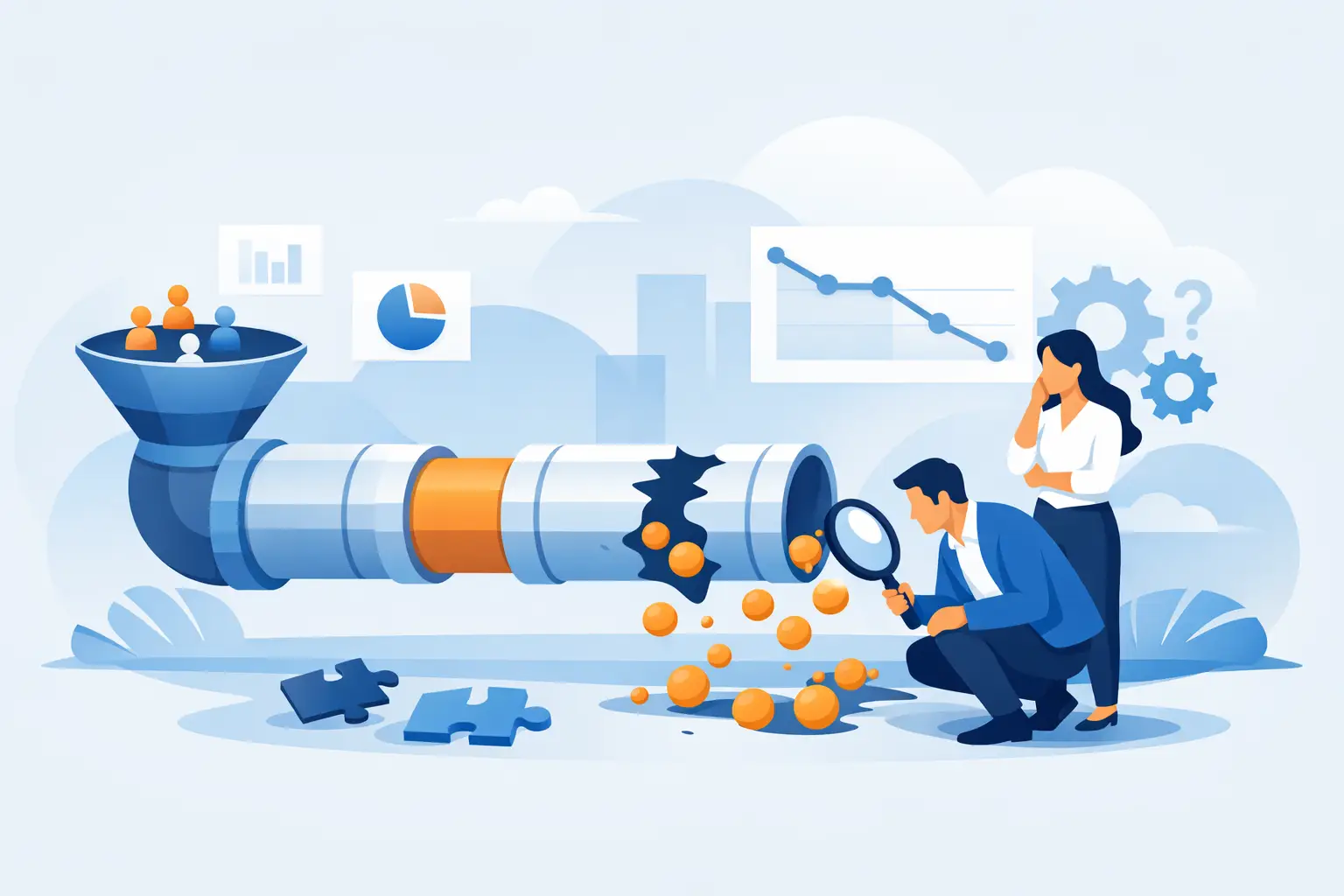
A strong outbound campaign can fail before a prospect reads a single word. Email deliverability for outbound determines whether your message reaches the inbox, lands in spam, or disappears before it has a chance to create a sales conversation. For sales leaders, that is not a technical nuisance. It is a pipeline problem.
When inbox placement drops, reply rates follow. When reply rates fall, teams often blame the copy, the offer, or the list. Those may be part of the issue, but the real bottleneck is frequently the sending infrastructure. Better targeting and persuasive messaging cannot produce qualified appointments if your domains have lost trust with mailbox providers.
Why Deliverability Is a Revenue Variable
Outbound email works when several systems perform together: the right audience, a relevant reason to reach out, credible sending infrastructure, thoughtful sequencing, and fast follow-up. Deliverability sits underneath all of them. It determines whether the rest of your investment can produce an outcome.
Mailbox providers evaluate sending behavior constantly. They look at authentication, sender reputation, complaint rates, engagement signals, list quality, message patterns, and volume changes. Their job is to protect users from unwanted mail. Your job is to demonstrate that your outreach is relevant, controlled, and sent by a legitimate business.
That creates a useful operating principle: do not treat outbound email like a high-volume advertising channel. Treat it like a reputation-based sales channel. Every campaign either strengthens or weakens the reputation attached to your sending domains.
For an enterprise sales motion, lower volume with sharper targeting often outperforms a broad blast. A financial services executive, healthcare operations leader, or logistics decision-maker is not likely to respond because they received the most polished generic email. They respond when the message reflects a real business priority and arrives in an inbox they actually check.
The Foundations of Email Deliverability for Outbound
Deliverability starts before the first sequence launches. The right setup reduces risk, gives your team clean reporting, and prevents one weak campaign from damaging your primary corporate domain.
Separate Your Prospecting Infrastructure
Your primary company domain supports customer communication, hiring, partnerships, invoices, and internal credibility. It should not carry the full risk of outbound prospecting at scale. Use purpose-built secondary domains that are closely aligned with your brand, configured correctly, and managed as part of a planned sending environment.
This is not permission to create lookalike domains carelessly. The domains should be professional, clearly associated with your business, and monitored closely. A confusing or deceptive domain can harm trust with prospects as much as poor inbox placement harms performance.
A practical outbound setup also spreads activity across multiple mailboxes instead of forcing high daily volume through one sender. This creates more stable sending behavior and gives operators the ability to pause, adjust, or retire a mailbox before a larger issue develops.
Authenticate Every Sending Domain
Authentication is table stakes. SPF, DKIM, and DMARC records verify that your sending infrastructure is authorized to send mail on behalf of your domain. Without them, mailbox providers have less reason to trust your messages.
The technical details matter, but the business case is simple: authenticated mail signals legitimacy. It also protects your domain from unauthorized use and provides a stronger foundation for reputation management.
DMARC policies should be implemented carefully. Organizations with complex email ecosystems need to understand every valid sender before enforcing strict policies. A rushed configuration can interrupt legitimate customer, marketing, or operational emails. This is one area where accuracy matters more than speed.
Warm Up With Realistic Behavior
New domains and mailboxes have no meaningful sending reputation. Launching a large campaign immediately is one of the fastest ways to trigger filtering.
Increase volume gradually while maintaining normal human-like sending patterns. Start with modest outreach, monitor results, and scale only when mailbox health and engagement are stable. There is no universal daily volume that works for every business. The right threshold depends on domain age, mailbox provider mix, list quality, offer relevance, and historical performance.
Automated warm-up tools can support a ramp-up plan, but they are not a substitute for legitimate engagement. The strongest positive signals come from real recipients opening, replying, and moving your email out of spam when it is relevant to them.
List Quality Protects Your Sender Reputation
Bad data is expensive twice. First, it wastes outreach volume on people who will never buy. Second, invalid addresses, mismatched contacts, and uninterested recipients create negative signals that reduce future inbox placement.
Before a campaign begins, validate email addresses and verify that each contact fits the ideal customer profile. Review job titles, company size, industry, geography, and likely buying role. If your offer is built for IT leaders at mid-market firms, do not dilute the campaign with loosely related contacts simply to increase list size.
Intent data can improve deliverability indirectly because it improves relevance. Reaching accounts that are actively researching a relevant solution is more likely to generate engagement than contacting a broad static database. Engagement is not guaranteed, but a timely, targeted message has a far better chance of earning a reply than a generic pitch.
Suppression management is equally important. Maintain clear do-not-contact lists, immediately honor opt-outs, and prevent the same prospect from receiving overlapping sequences from multiple sales teams. Nothing damages a brand faster than sending three versions of the same pitch from three different representatives in one week.
Write Emails That Earn Engagement
Deliverability and copywriting are connected. Spam filters assess content, but more importantly, recipients decide whether your email is welcome. Their actions feed back into sender reputation over time.
The best outbound emails are specific, brief, and commercially relevant. They identify a plausible problem, connect it to an observable business situation, and make a low-friction request. They do not pretend to know everything about the prospect’s company, manufacture urgency, or bury the point under a long product explanation.
Avoid excessive links, image-heavy layouts, hype-driven language, and overly aggressive calls to action. A plain-text email with one clear purpose often performs better than a polished promotional template because it resembles a legitimate business conversation.
Personalization should be useful, not decorative. Mentioning a prospect’s city, college, or a random social post does not create relevance. Referencing an expansion initiative, hiring pattern, technology investment, or industry-specific growth challenge can. If the team cannot explain why a prospect was selected, the prospect will likely feel that in the message.
Monitor the Metrics That Reveal Trouble Early
Open rates are less reliable than they once were because privacy features can distort them. Do not use opens as the primary measure of outbound health. Focus on indicators that reflect both inbox placement and commercial performance.
Watch bounce rates, spam complaints, reply rates, positive reply rates, unsubscribe rates, and booked-meeting rates by domain, mailbox, segment, and sequence. A sudden fall in replies from a previously healthy mailbox may signal a deliverability issue. A high bounce rate usually points to data quality. High unsubscribe or complaint activity often indicates weak targeting, poor timing, or an offer that is not relevant enough.
Segment reporting is critical. If one industry, title group, or campaign angle performs poorly, do not keep sending to force an outcome. Pause it, diagnose the issue, and refine the audience or message. Good outbound operations are disciplined enough to stop waste quickly.
Build Deliverability Into Your Sales Process
The strongest outbound programs do not hand prospects from marketing to sales after a vague response. They define what counts as a qualified reply, route conversations into the CRM quickly, and make sure follow-up happens while interest is still active.
That operational discipline improves deliverability as well as conversion. When campaigns target the right accounts, generate legitimate conversations, and remove unqualified contacts from future outreach, the entire system becomes cleaner. Sales gets more time with potential buyers. Prospects get fewer irrelevant messages. Sender reputation becomes easier to maintain.
A managed outbound partner should be accountable for this full chain, not just the number of emails sent. Appointment Gurus approaches pipeline generation as an integrated operation: defined targeting, controlled sending infrastructure, relevant multichannel outreach, CRM visibility, and a clear focus on qualified meetings.
Email deliverability is not a one-time technical project. It is the daily discipline of earning access to the inbox, protecting your brand, and giving every well-targeted sales message a real chance to start a valuable conversation.