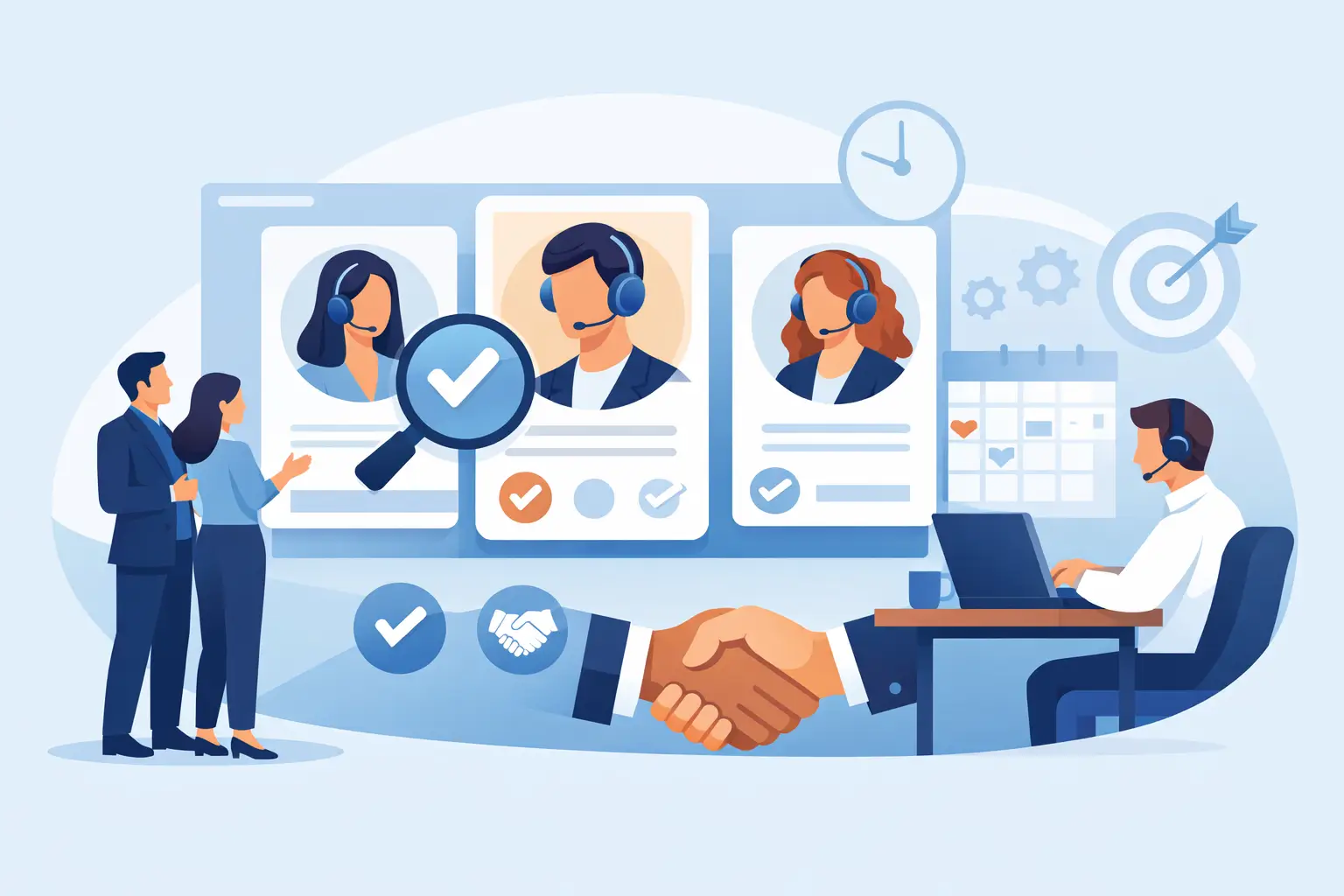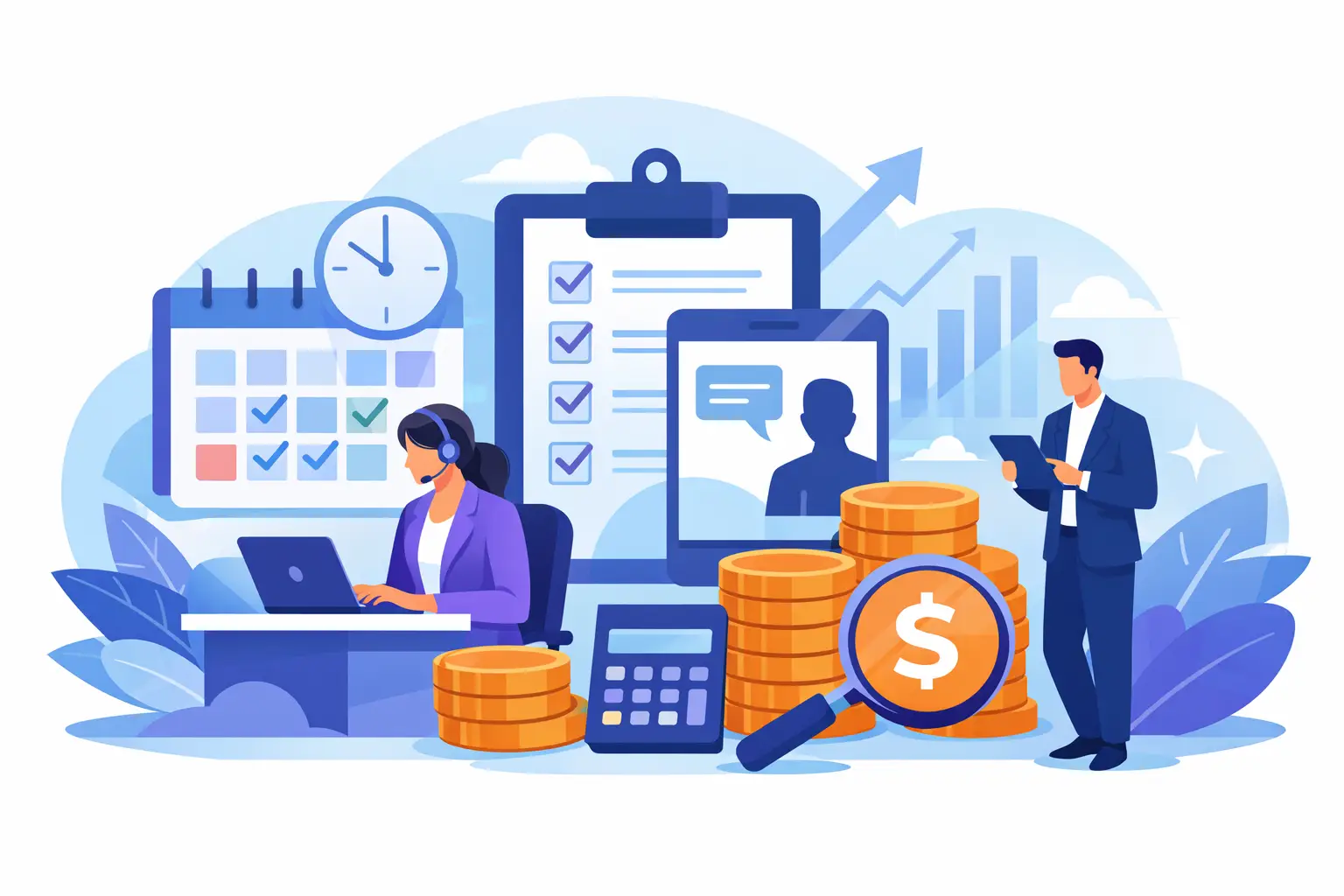
A full calendar is not the same as a healthy pipeline. Sales leaders do not need more conversations with people who are merely curious. They need conversations with buyers who fit the account profile, have a relevant problem, and can move through a real sales process. That is the standard for how to book sales meetings that create revenue rather than activity.
The difference usually comes down to execution before the meeting is ever booked: who you target, what signals you use, how you position the outreach, and how quickly your team responds when interest appears. Treat appointment setting as a managed pipeline system, not a volume contest.
Start With a Meeting-Ready Ideal Customer Profile
Most poor-quality meetings begin with weak targeting. If the team cannot clearly define which companies, decision-makers, and buying conditions make an opportunity worth pursuing, outreach will generate noise no matter how polished the messaging is.
Build your ideal customer profile around commercial evidence. Look at accounts that have closed, expanded, or moved through the pipeline quickly. Identify their industry, company size, technology environment, geography, business model, buying committee, and common trigger events. For a logistics provider, a trigger may be a new distribution center or rising delivery volumes. For a financial services firm, it may be regulatory change, hiring growth, or a shift in client acquisition strategy.
Then define what qualifies as a sales meeting. A qualified meeting should include a relevant stakeholder, a stated or observable business need, basic fit with your service, and a reasonable path to a next step. Not every meeting needs an active project or fixed budget. But there should be enough evidence that your sales team can run a productive discovery conversation.
This definition protects closers from spending their week on calls that were never likely to convert. It also gives SDRs, agencies, and automated outreach systems a clear operating standard.
Use Intent Signals to Find Buyers Before They Raise Their Hand
Cold outreach is most effective when it is not entirely cold. Firmographic data tells you whether an account looks like a fit. Intent data and buying signals help show whether it is worth contacting now.
Useful signals include increased research into a relevant category, visits to high-intent website pages, content engagement, leadership changes, funding, expansion announcements, new job postings, technology changes, and participation in industry events. None of these signals guarantees a purchase. Together, however, they help prioritize accounts that may have a current business problem your team can solve.
The trade-off is accuracy versus scale. Broad prospecting can create more contacts quickly, but it often lowers meeting quality and wastes sales capacity. Highly selective targeting can improve conversion rates but may limit near-term volume. The right mix depends on your total addressable market, deal size, sales cycle, and current pipeline coverage.
For high-value B2B offers, precision usually wins. A smaller group of in-market accounts with relevant outreach is more valuable than thousands of generic touches sent to companies with no reason to engage.
How to Book Sales Meetings With Relevant Outreach
The first message does not need to explain everything you do. Its job is to earn attention and make a credible case for a short conversation. Prospects are not looking for another product pitch in their inbox. They are deciding whether your message is specific enough to deserve a reply.
Lead with a business issue that is plausible for the prospect’s role and company. Connect that issue to an observation, trigger, or industry pattern. Then offer a concise reason to talk. A technology leader may care about reducing manual workflows or improving data visibility. A VP of Sales may care about pipeline coverage, rep productivity, and the cost of building an internal SDR function.
Avoid empty personalization. Mentioning a recent company announcement is not useful if it has no connection to the problem you solve. Strong personalization shows you understand the account’s likely priorities and can articulate a relevant outcome.
A practical outreach message has three parts: a reason you selected the account, a problem or opportunity worth addressing, and a low-friction meeting request. Keep the request direct. Asking for 15 or 20 minutes to compare approaches works better than pushing for a full product demonstration before interest is established.
Build a Multichannel Follow-Up System
One email rarely books a qualified meeting. Decision-makers are busy, inboxes are crowded, and timing matters. A coordinated sequence across email, phone, LinkedIn, retargeting, and relevant content creates more opportunities to be seen without turning your brand into background noise.
Each channel should have a job. Email can establish context and provide a clear value proposition. Phone outreach can test interest, uncover timing, and handle objections in real time. LinkedIn can reinforce credibility and create familiarity. Paid advertising and webinar campaigns can capture demand from accounts that are not ready to reply directly.
Persistence matters, but repetition without new value does not. Follow-up messages should introduce a different angle: an operational problem, a benchmark, a trigger event, a relevant outcome, or a short case example. If there is no engagement after a disciplined sequence, pause the account and return when new intent signals appear.
The objective is not to force a response. It is to create a consistent, professional presence around buyers who have a reason to care.
Respond to Interest at Sales Speed
A delayed response is one of the most expensive mistakes in appointment setting. When a prospect replies, completes a form, attends a webinar, or answers an AI voice agent, the window for engagement is open. Waiting until the next day gives competitors time to enter the conversation and gives the buyer time to lose urgency.
Set clear service-level agreements for every inbound and outbound response. High-intent replies should be handled within minutes when possible, not hours. The responding representative should have the account context, outreach history, stated pain point, and a simple path to scheduling.
Scheduling should also be easy. Offer a small number of specific times, confirm the meeting purpose, and send a short agenda. This reduces no-shows because the prospect knows why they agreed to speak and what they will gain from the conversation.
If an SDR books the meeting, the handoff to the account executive must be clean. Notes should capture the contact’s role, stated challenge, timeline, current approach, other stakeholders, and any objections raised. A booked meeting loses value when the closer begins from zero.
Measure Quality, Not Just Meeting Volume
Meeting count is a useful activity metric, but it is not a performance metric on its own. A campaign that generates 40 meetings with low attendance and no pipeline is less effective than one that generates 12 meetings with a strong opportunity rate.
Track performance through the full funnel. At a minimum, monitor:
- Positive reply and conversation rates by segment, persona, and channel
- Meetings booked, held, and completed
- Qualification rate after discovery
- Opportunities created and pipeline value generated
- Cost per held meeting and cost per opportunity
- Opportunity-to-close conversion and revenue attribution
These metrics reveal where the system is breaking. Low reply rates can point to weak targeting or messaging. High booking rates but low show rates may signal poor confirmation or low perceived value. Strong attendance with weak qualification often means the meeting criteria are too loose.
Review these numbers weekly, not only at the end of a quarter. Small adjustments to account selection, call scripts, offers, and follow-up timing compound quickly when they are applied across a consistent outreach engine.
Decide What to Keep In-House and What to Outsource
Building an internal appointment-setting function can make sense when you have a mature sales process, strong management capacity, clear data operations, and enough volume to support hiring, training, technology, and ongoing optimization. It gives you direct control, but it also creates fixed costs and management overhead.
Outsourcing can be the faster route when internal closers are spending too much time prospecting, pipeline is inconsistent, or you need specialized capabilities such as intent data, industry research, multichannel outreach, paid demand capture, and AI calling. The key is choosing a partner that works inside your CRM, follows agreed qualification standards, and reports on pipeline outcomes rather than vanity metrics.
Appointment Gurus helps growth-focused B2B teams combine targeted prospecting, intent signals, managed outreach, and CRM-integrated execution so internal sales teams can spend more time closing qualified opportunities.
The best next move is rarely sending more messages. It is tightening the definition of a good meeting, finding accounts with a reason to act, and giving every interested buyer a fast, relevant path to a serious sales conversation.