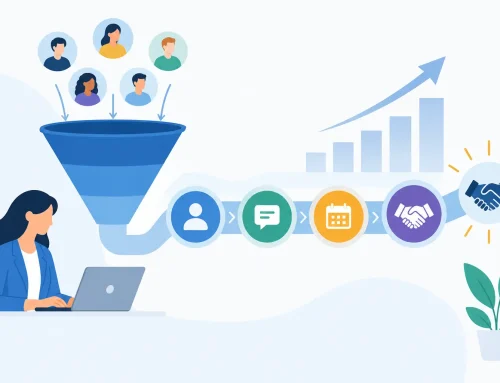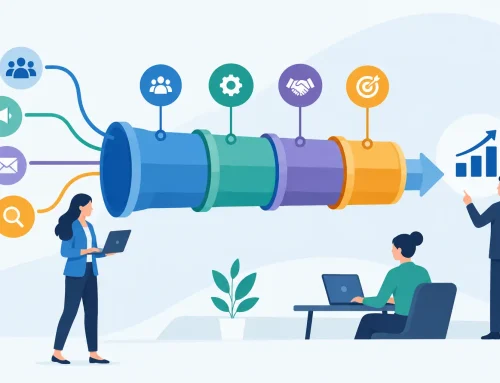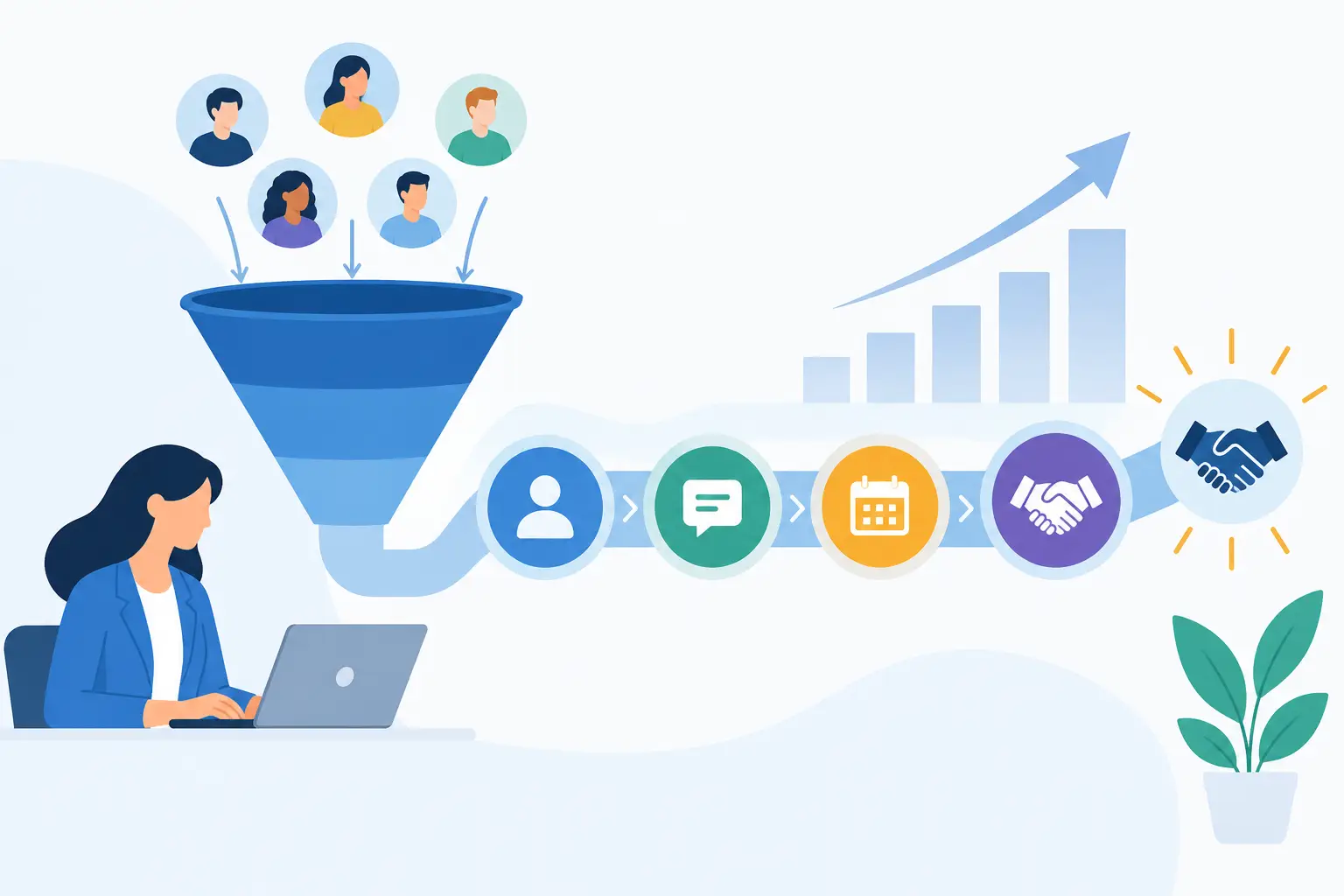
A full pipeline does not start with a larger prospect list. It starts with deciding which companies deserve your team’s attention before they receive a single call, email, or ad impression. This account targeting guide explains how B2B sales leaders can focus outbound resources on accounts that fit, show buying potential, and can realistically become qualified opportunities.
For growth teams, the cost of weak targeting is not merely low reply rates. It is wasted SDR time, poor calendar quality, frustrated closers, and a CRM filled with companies that will never buy. Strong account targeting creates the opposite effect: fewer irrelevant touches, more productive conversations, and a pipeline your sales team can trust.
What Account Targeting Should Accomplish
Account targeting is the process of identifying and prioritizing specific companies most likely to become customers. It is more precise than building a broad lead list by job title. Instead of asking, “Who can we contact?” the better question is, “Which organizations have the business profile, problem, capacity, and timing to buy?”
That distinction matters. A VP with the right title at the wrong company is not a qualified prospect. The same VP at a firm that matches your ideal customer profile, has a visible business trigger, and is actively researching a related solution is a far stronger opportunity.
A practical targeting model should produce three outcomes. It should tell your team which accounts to pursue, who to engage within those accounts, and how aggressively to allocate outreach effort. If the model does not change those decisions, it is too broad to improve performance.
Build an Ideal Customer Profile That Sales Can Use
An ideal customer profile, or ICP, is not a document that sits in a strategy folder. It is the operating standard for your prospecting engine. It should be detailed enough that an SDR, campaign manager, or outsourced appointment-setting partner can use it to make consistent decisions without asking for clarification on every account.
Start with your best current customers, not assumptions about the market. Review the accounts that close quickly, retain well, expand over time, and create healthy margins. Look for repeatable firmographic and operational patterns: industry, employee range, revenue band, geography, business model, technology environment, and sales complexity.
Then add the factors that explain why they bought. A logistics provider may need to be expanding into new regions. A healthcare technology firm may be struggling to fill revenue roles. A financial services organization may be under pressure to increase advisor productivity while controlling acquisition cost. These conditions are often more useful than surface-level company size alone.
Avoid making the ICP so narrow that your pipeline stalls. A highly restrictive profile can work for large enterprise contracts with substantial deal values, but it may limit learning for a growing company. The goal is focus, not false precision. Build a primary ICP, then define adjacent segments worth testing under controlled conditions.
Separate fit signals from intent signals
Fit and intent are related, but they answer different questions. Fit asks whether an account could be a strong customer. Intent asks whether that account may be ready to evaluate solutions now.
Fit signals include industry, size, operating model, location, regulatory requirements, and technology stack. Intent signals can include research activity, relevant content engagement, job postings, leadership changes, funding, expansion, product launches, or changes in a company’s sales organization.
A high-fit account without intent may still be worth long-term nurture. A high-intent account with poor fit may generate a meeting that never converts. The strongest prospecting programs concentrate their fastest follow-up on accounts where both conditions are present.
Score Accounts Before You Launch Outreach
Not every account should receive the same sequence, call volume, or paid media budget. Account scoring gives your team a practical method for setting priorities instead of relying on whoever appears first in a database.
Use a simple weighted model at first. Assign points for core fit criteria, then add points for buying signals and penalties for disqualifiers. A company in your strongest vertical with the right headcount and a recent growth trigger should rank above a similar company that has no indication of change.
Your score should reflect deal economics as well. If an enterprise account has a longer sales cycle but a significantly higher lifetime value, it may justify more personalized outreach than a mid-market account. If your sales team needs near-term meeting volume, a faster-moving segment may receive a higher operational priority. The right mix depends on revenue goals, sales capacity, and average deal size.
Do not overengineer scoring before your first campaign. The value comes from using the model, reviewing results, and adjusting based on actual conversion data. Track which account tiers produce positive replies, booked meetings, sales-accepted opportunities, and closed revenue. A score that predicts meetings but not pipeline needs work.
Map the Buying Committee, Not One Contact
A targeted account is rarely won through a single contact. Complex B2B purchases involve users, champions, decision-makers, financial stakeholders, technical reviewers, and people who can quietly block momentum. Treating one executive as the entire buying committee makes your pipeline dependent on a fragile assumption.
For each target account, identify the likely economic buyer, the operational owner of the problem, and the people affected by implementation. In technology, that may mean a revenue leader, sales operations owner, and finance stakeholder. In healthcare, it could involve an executive sponsor, department leader, and compliance or procurement contact.
The message should change by role. Executives care about revenue impact, risk, and cost control. Functional leaders care about execution, workload, and measurable performance. Operations and technical teams care about integration, data quality, and disruption. Repeating the same generic pitch to every title signals that you have not done the work.
Multi-threading does not mean spamming every employee. It means creating informed, coordinated coverage across the people most likely to influence a buying decision. Start with a manageable number of contacts per account, monitor engagement, and expand intelligently when an opportunity shows traction.
Match the Message to the Account’s Situation
Personalization is not inserting a company name into a template. Relevant outreach demonstrates that you understand a prospect’s likely commercial challenge and can connect it to a specific outcome.
Use the account research to form a credible point of view. If a company is hiring aggressively for sales roles, the conversation may center on ramping pipeline while new reps come online. If it has entered a new market, the message may focus on reaching qualified buyers without building a full outbound team in-house. If engagement data suggests active interest, follow up quickly with a direct reason for the conversation.
Keep the first touch focused. Do not lead with a catalog of services, platforms, or capabilities. Lead with the business problem and the result your solution can help produce. The purpose is to earn a conversation, not force a complete sales presentation into an email.
Use Multiple Channels With One Commercial Narrative
The most effective account programs coordinate email, phone, LinkedIn activity, targeted advertising, and other appropriate channels. Each touch should reinforce the same core message while giving the prospect a different way to engage.
Channel mix depends on the audience. Senior executives may respond best to concise email and relevant peer-level messaging. Operational buyers may engage after seeing a practical use case or attending a focused webinar. High-value accounts often justify calling because live conversations reveal qualification details that click data cannot.
Consistency matters more than volume. A prospect who receives disconnected messages from different team members will see a disorganized vendor. A prospect who sees a clear, relevant point of view across channels is more likely to recognize the value of a conversation.
Measure Pipeline Quality, Not Activity Alone
Open rates, call attempts, and contact volume can help diagnose campaign execution, but they are not the business outcome. Account targeting should be measured against meeting quality and pipeline contribution.
Review performance by account tier, vertical, company size, trigger event, channel, and persona. This shows where your targeting is producing real sales opportunities and where it is creating calendar activity without commercial value. It also exposes a common issue: a segment may generate many replies because the message is interesting, yet still fail to produce buyers with budget or urgency.
The core metrics should include qualified meetings booked, meeting-to-opportunity conversion, opportunity-to-close conversion, pipeline value, cost per qualified meeting, and sales cycle length. Sales acceptance is especially useful. If account executives routinely reject meetings from a segment, the targeting criteria or qualification process needs correction.
This feedback loop must be fast. Marketing, SDRs, and sales leadership should review account-level results regularly, then update lists, messaging, scoring, and disqualification rules. Static targeting loses value as markets, priorities, and buying conditions change.
When Managed Execution Makes Sense
Building an internal account targeting engine requires clean data, research capacity, messaging discipline, multichannel execution, and tight CRM reporting. Some teams have those capabilities in place. Many do not, especially when closers are already carrying aggressive revenue targets.
A managed partner can remove the operational burden when it brings more than contact data. The right model combines industry-specific targeting, intent signals, qualified outreach, calling capability, and transparent reporting that fits your CRM workflow. Appointment Gurus, for example, is built for teams that need this execution layer without hiring and managing a full outbound function internally.
The standard should remain the same whether execution is internal or outsourced: target accounts must produce conversations with companies that have a credible reason and ability to buy. More meetings only matter when they create more qualified pipeline.
Start with a focused account universe, give it a clear commercial hypothesis, and let revenue data guide the next move. That is how account targeting becomes a predictable pipeline system rather than another list-building exercise.