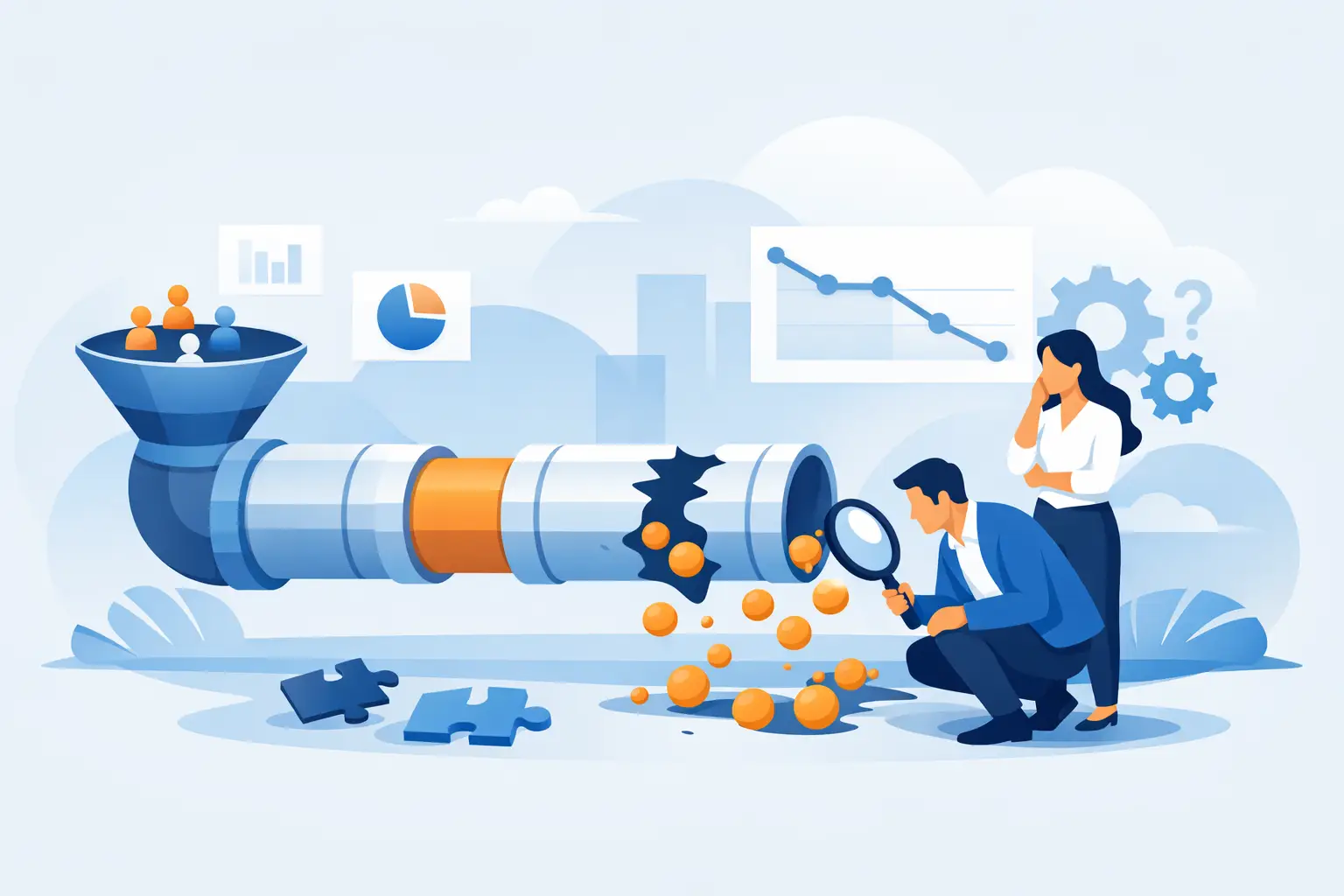
Most sales teams do not have a closing problem. They have a conversation problem. Reps are spending too much time chasing cold lists, following up with weak intent, and leaving money on the table because nobody can consistently work the top of funnel at scale. That is where ai calling for b2b sales starts to make financial sense.
Used correctly, AI calling is not a gimmick and it is not a replacement for your entire sales team. It is a way to create more live conversations, qualify interest faster, and move serious buyers into your pipeline without forcing account executives or founders to do repetitive outreach. For companies that need more booked meetings and less prospecting drag, it can become a real operating advantage.
What ai calling for b2b sales actually does
At a practical level, AI calling uses voice agents to place outbound calls, handle inbound responses, qualify prospects, answer common questions, and route interested buyers to the right next step. That next step could be a booked appointment, a transfer to a rep, or a CRM-triggered follow-up sequence.
The value is not just that calls happen automatically. The value is that more contacts get worked, follow-up happens faster, and the process becomes less dependent on human bandwidth. Most internal SDR teams struggle with consistency. Call blocks slip. Follow-ups get delayed. Lead response time gets worse as priorities pile up. AI calling gives you a way to keep activity high without increasing headcount at the same rate.
That matters most in B2B markets where timing and persistence shape outcomes. If a prospect shows buying intent this week and your team reaches out next week, the opportunity may already be gone.
Why B2B teams are adopting AI calling now
The market has changed in a few important ways. First, outbound is harder than it used to be. Buyers are more selective, inboxes are crowded, and generic call scripts are easier to ignore. Second, sales leaders are under pressure to improve pipeline efficiency, not just activity volume. Third, many teams still need more opportunities but do not want the cost and management load of building a larger SDR function internally.
AI calling helps on all three fronts. It can increase speed to lead, support higher outreach volume, and create a more disciplined qualification process. It also works well as part of a broader system rather than a stand-alone tactic. When paired with intent data, industry targeting, email, LinkedIn, and CRM workflows, it becomes much more effective than simple dial-and-pitch outreach.
This is the real shift. Smart companies are not asking whether AI can make calls. They are asking whether AI can help create more qualified sales conversations at a lower operational cost. That is the standard that matters.
Where AI calling works best in B2B sales
AI calling performs best when the offer is clear, the target market is defined, and the outreach process already has some structure behind it. If you sell into specific verticals such as technology, healthcare, financial services, or logistics, AI voice outreach can be highly effective because qualification criteria tend to be consistent. Company size, role, timing, current provider, pain point, and urgency are all factors an AI system can screen for quickly.
It is also strong in follow-up environments. Think webinar registrants, ad leads, inbound form fills, old opportunities, event lists, and dormant accounts. In these cases, the prospect already has some signal attached to them. AI calling can respond quickly, ask the right qualifying questions, and route the highest-potential leads into a human-led sales process.
Where it tends to struggle is in highly complex sales situations that require deep discovery from the first touch, or where messaging is still unclear. If your team cannot explain the value proposition simply, no calling system will fix that. AI improves execution. It does not rescue weak positioning.
The real benefits of ai calling for b2b sales
The first benefit is coverage. Most teams do not work their total addressable market thoroughly. They touch too few accounts, too infrequently, and with inconsistent follow-up. AI calling expands coverage without expanding management overhead linearly.
The second is speed. Buyers who raise a hand or show intent should be contacted fast. AI does that reliably. A fast response can be the difference between booking a meeting and missing the deal window entirely.
The third is qualification consistency. Human reps vary. Some ask better questions than others. Some push meetings through that should not be booked. A properly configured AI process applies the same standards every time, which helps protect calendar quality and downstream conversion rates.
The fourth is efficiency. Your closers should close. Your senior salespeople should not spend prime hours recycling old leads or making first-touch calls to low-probability accounts. AI calling helps move routine outreach and early qualification into a more scalable system.
There is also a data advantage. Every call creates information. Objections, connect rates, qualification outcomes, and response patterns can all be captured and fed back into targeting, messaging, and campaign decisions. That gives leadership better visibility into what is actually happening at the top of funnel.
What to watch out for
AI calling is not automatically effective just because the technology exists. Bad targeting, weak scripts, poor call logic, and disconnected systems will still produce weak results. If you point AI at the wrong list, you just scale inefficiency faster.
Compliance, call quality, and brand perception matter too. The experience must sound professional, conversational, and relevant to the buyer. It should respect handoff moments and not trap prospects in awkward flows. In B2B, credibility matters on the first touch. If the interaction feels sloppy, that cost shows up later in conversion rates.
There is also a strategic trade-off. High call volume is not the same as pipeline quality. If your AI process optimizes for meetings booked without strong qualification controls, sales teams will feel the pain quickly. The right goal is not more calls. It is more qualified conversations with accounts that fit your ICP and have a reason to engage.
How to make AI calling produce pipeline, not just activity
Start with targeting. The strongest AI calling programs begin with a clear ideal customer profile, not a giant generic list. Industry, company size, role, geography, buying triggers, and intent signals all matter. Better inputs create better call outcomes.
Next, tighten your qualification framework. Define what counts as sales-ready. That usually includes role fit, business need, timing, authority, current process, and openness to a meeting. If those standards are vague, your meeting quality will be vague too.
Then look at orchestration. AI calling should not operate in isolation. It should sit inside a multichannel system that includes email, LinkedIn, retargeting, CRM automation, and human follow-up where needed. Prospects respond differently across channels. The strongest programs use voice as one part of a coordinated outreach engine.
Integration matters as much as messaging. If calls are happening but data is not syncing into your CRM, reps will miss context and follow-up will suffer. Every qualified interaction should create usable workflow data. That is how activity turns into pipeline management rather than disconnected noise.
Finally, measure the right outcomes. Connect rate matters, but booked meetings matter more. Booked meetings matter, but held meetings matter more. Held meetings matter, but qualified pipeline and closed revenue matter most. If you stop at surface metrics, you can fool yourself into thinking the program is working when it is only generating motion.
AI calling vs hiring more SDRs
For many companies, this is the real decision. Should you expand the team or improve the system?
Hiring more SDRs can work, but it comes with recruiting costs, ramp time, management overhead, performance variability, and turnover risk. AI calling changes the equation by handling a large share of repetitive outreach and first-stage qualification in a more predictable way. That does not mean human SDRs become irrelevant. It means their role becomes more focused on exception handling, strategic outreach, and higher-value conversations.
For lean teams, that can be a major advantage. For larger organizations, it can improve output per rep and reduce the cost of top-of-funnel coverage. The right model often blends both.
This is why managed execution matters. Technology alone rarely fixes pipeline inconsistency. Strategy, targeting, scripting, testing, CRM integration, and campaign management are what turn AI calling into a revenue channel. That is the difference between buying software and building a system that produces meetings.
Appointment Gurus approaches AI calling this way – as part of a managed pipeline engine built around qualified demand, not vanity activity.
The bottom line for sales leaders
If your team is losing selling time to prospecting, if lead response is inconsistent, or if pipeline depends too heavily on manual outreach, AI calling deserves a serious look. Not because it is trendy, but because it can create more qualified conversations with less drag on your revenue team.
The companies that get the most from it are not chasing automation for its own sake. They are building a top-of-funnel process that is faster, more disciplined, and easier to scale. That is a much better reason to invest.
The smartest next move is simple: look at where human effort is being wasted, then decide which part of that workload should never have been manual in the first place.